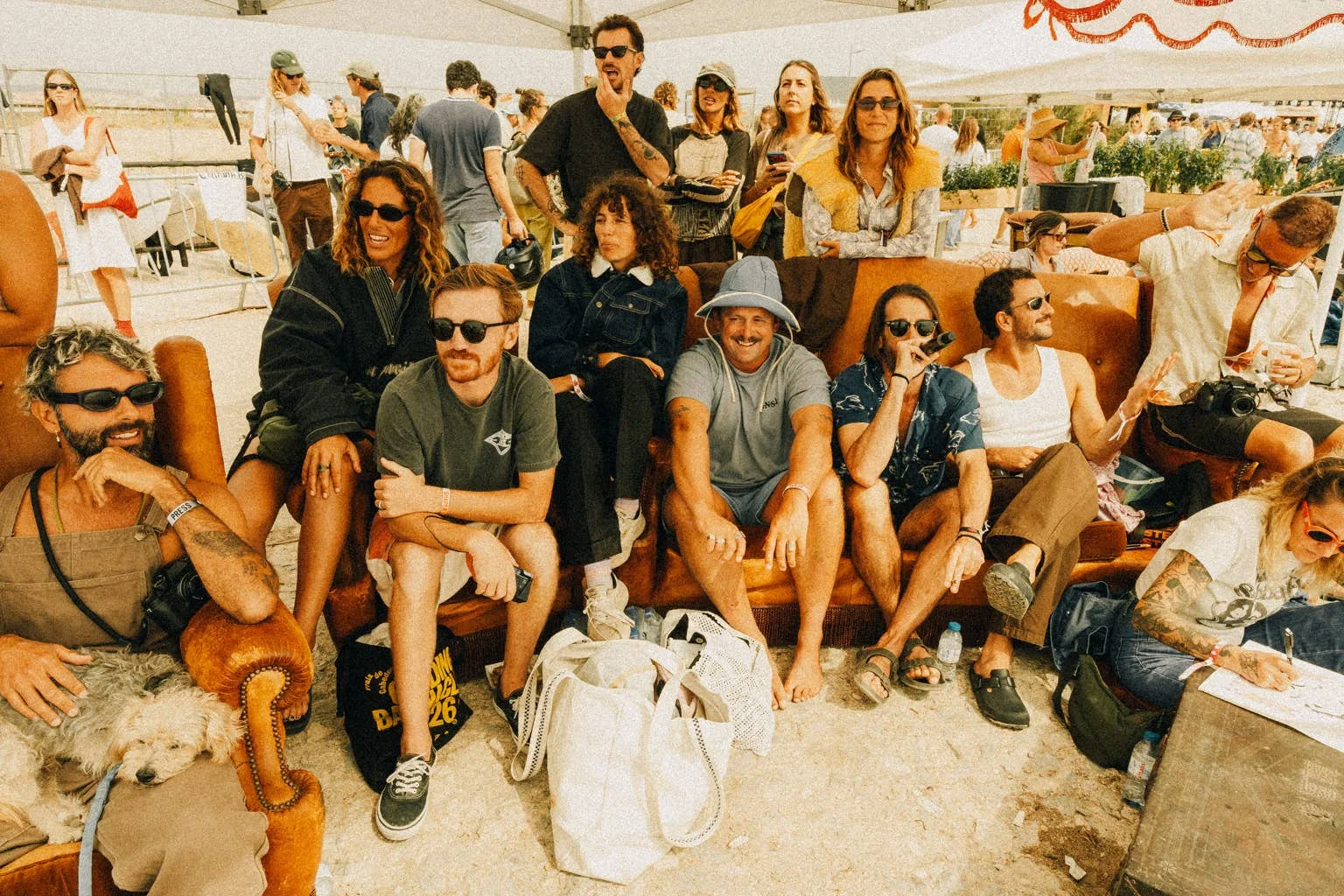
Gliding Barnacles makes its case through the way people share the event. At Praia do Cabedelo in Figueira da Foz, traditional longboarding, live music, art and communal meals are parts of one gathering, with no contest score separating the surfers from the audience. That mix helps explain how a small local get-together grew into an international festival while keeping its community roots visible.
The scale behind the scenes is considerable. Organizers put the core staff and volunteer crew at roughly 250 people; with invited surfers, board shapers, artists, musicians and media, the working community reaches about 400. Many have known one another for years, though new participants join each year. The final Sunday dinner, a hearty Cape Verdean cachupa stew shared by the remaining crew, offered a fitting close after the festival’s busiest Saturday night.
Simon Fitz
A festival organized around time together
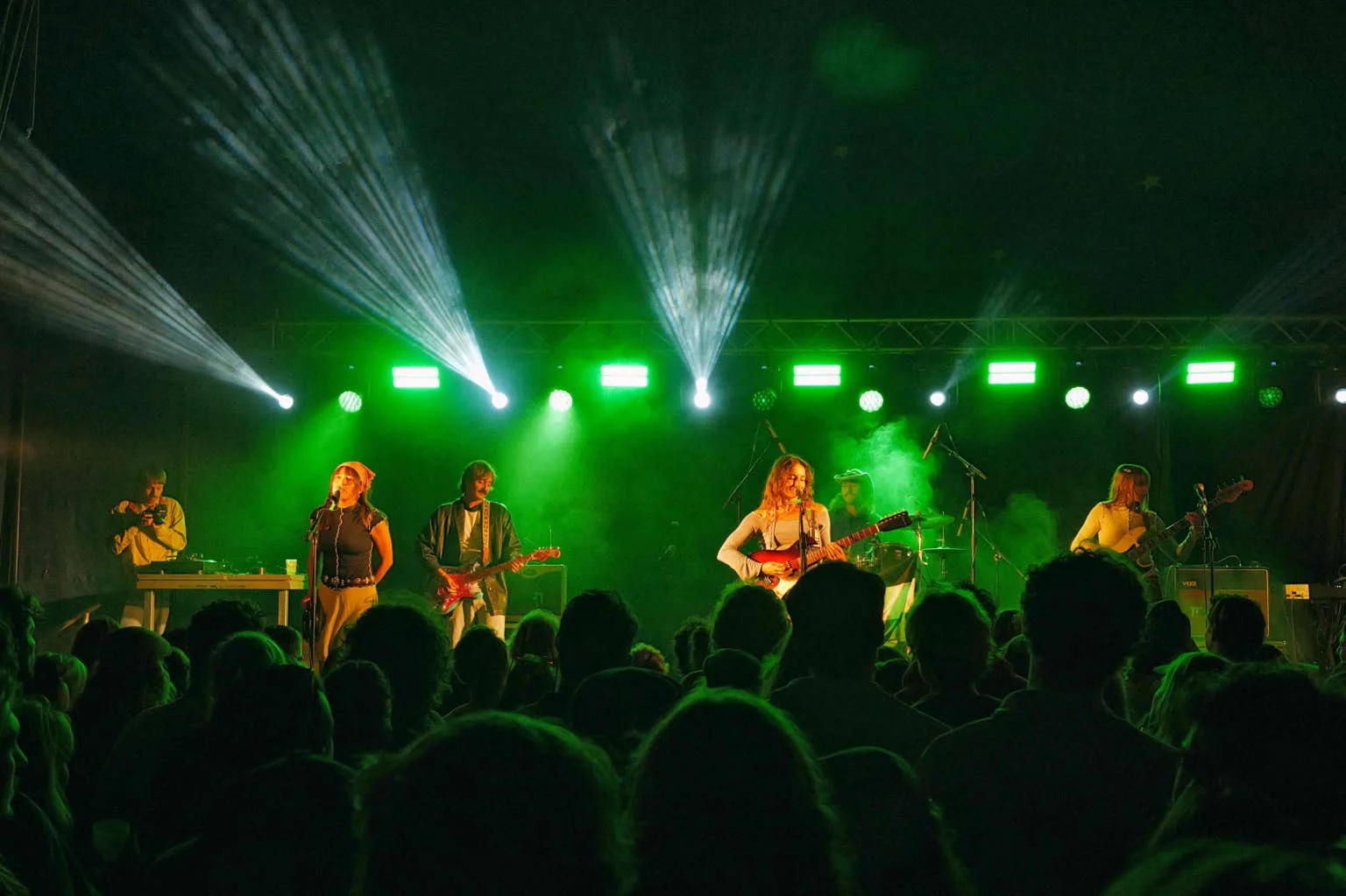
For four main festival days, invitees, volunteers and staff ate dinners prepared by Portuguese chefs, including Michelin-starred names and well-known local cooks. Each evening offered four dishes, served without charge. Music carried the gathering between meals and late into the night, with performers from around the world spread across four stages.
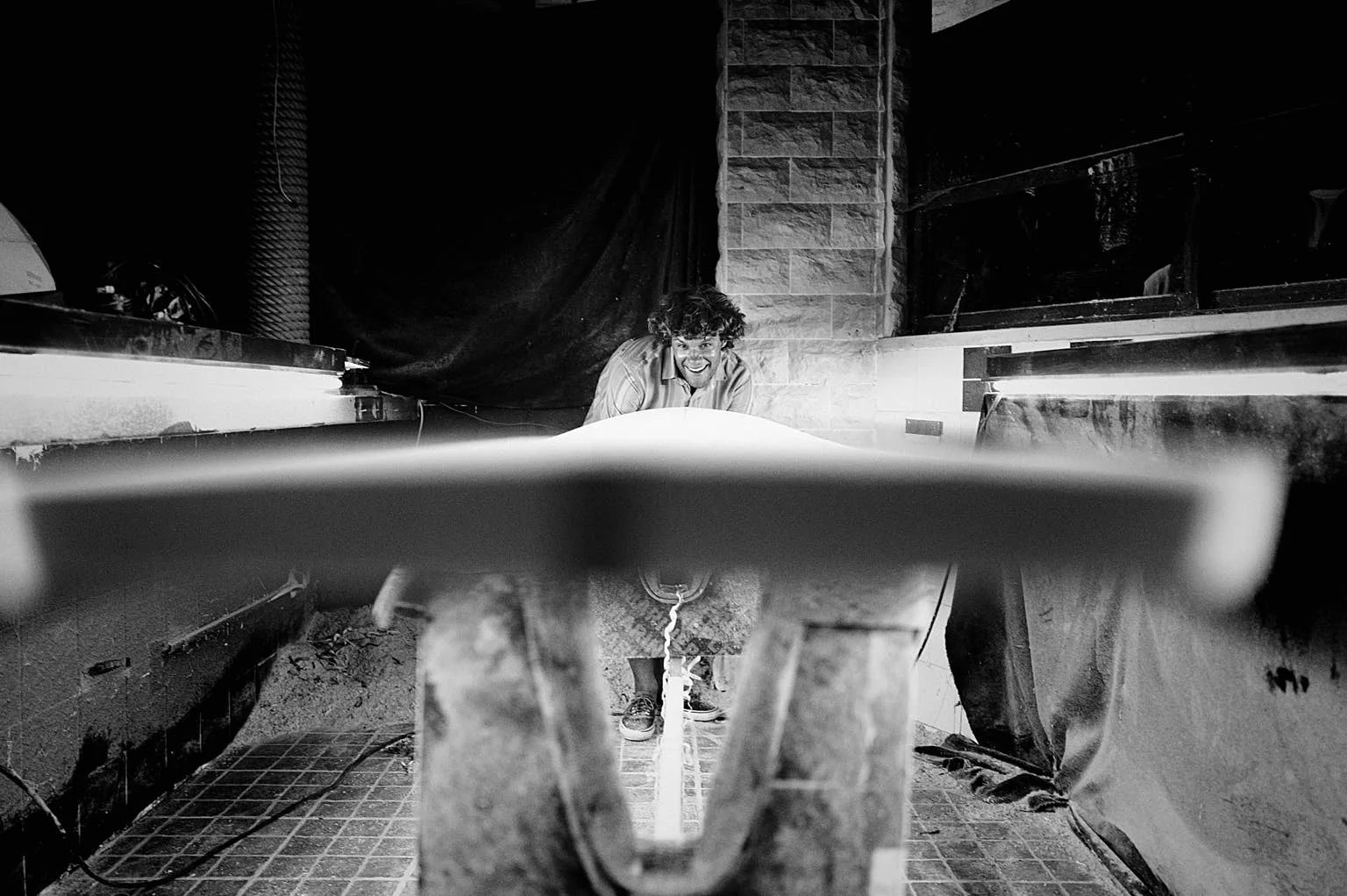
That hospitality is part of the event’s operating model. Gliding Barnacles depends on a large crew and a network of people who contribute different skills, from food and production to shaping boards and performing. The result can feel less like a lineup of attractions than a temporary community in which people move between roles. A musician can be part of the audience; a surfer can spend the afternoon with friends on the jetty; a volunteer can be there for the music as much as the work.
Chris Dodds
Much of the entertainment is free. A €50 donation provides access to the rest of the program, including five nights of music across three stages, board shaping, a living art gallery and impromptu performances. The combination creates room for encounters that aren’t tightly scheduled or packaged. For attendees, watching the crowd can be as absorbing as watching the surf.
Simon Fitz
Longboarding without a scoreboard
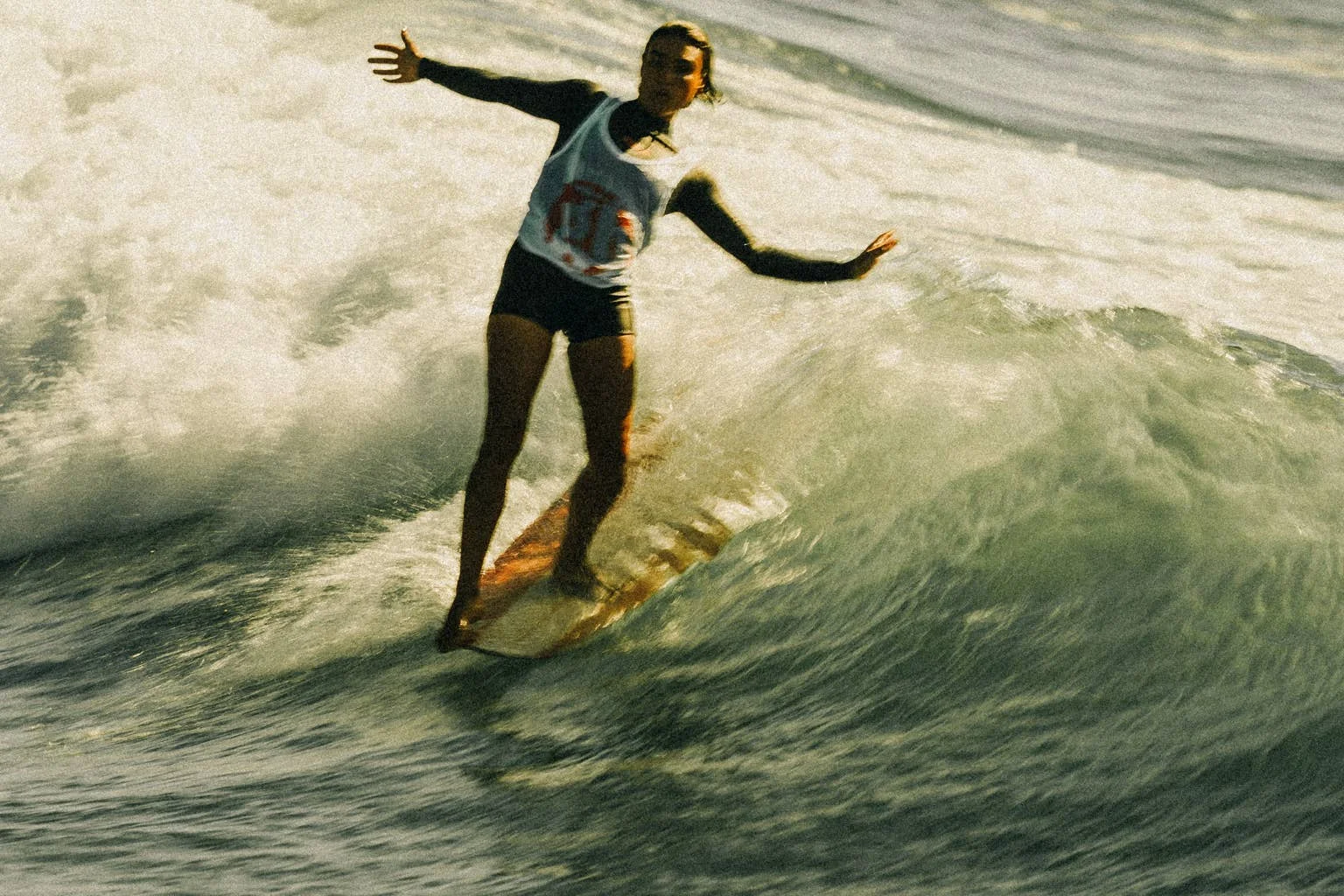
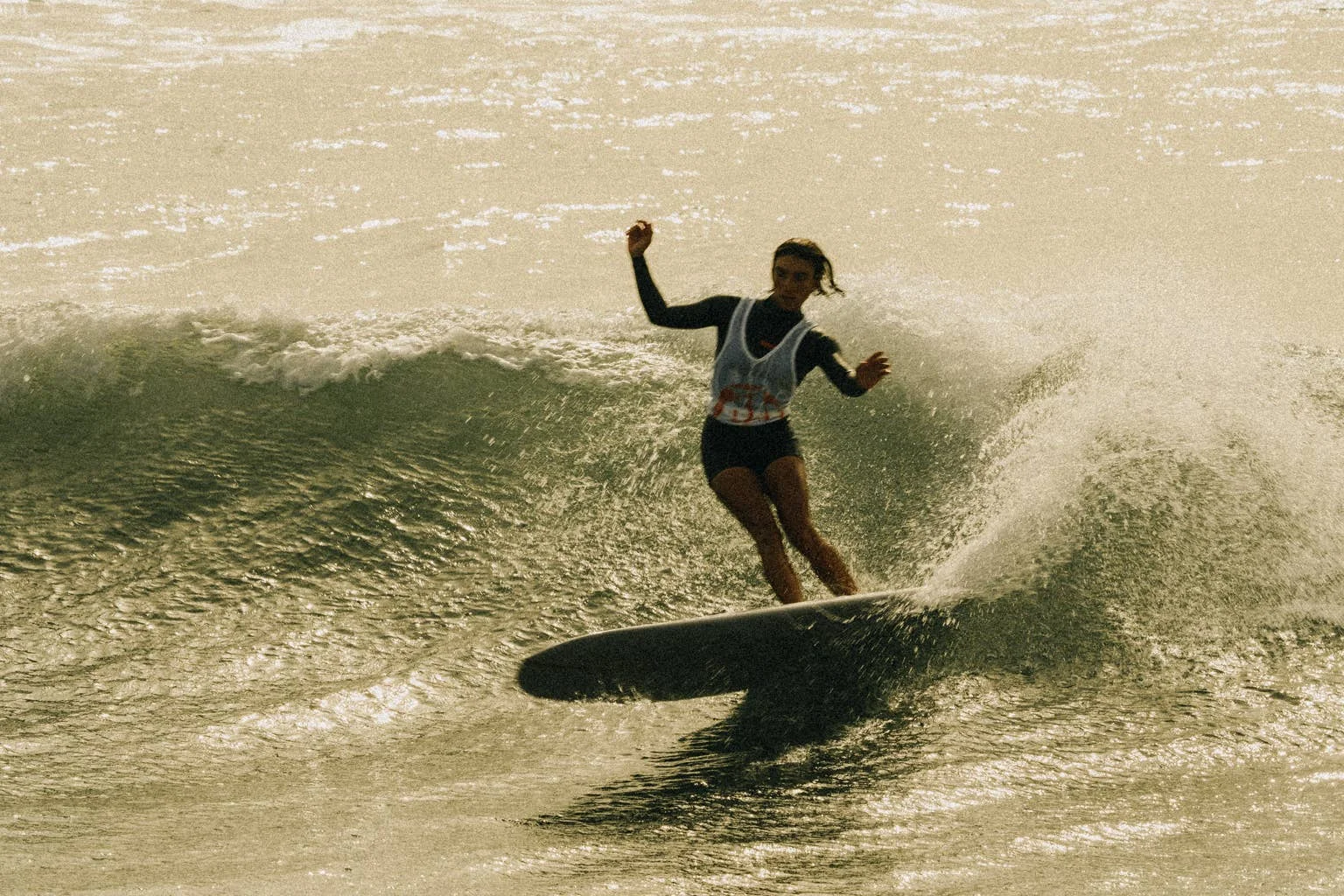
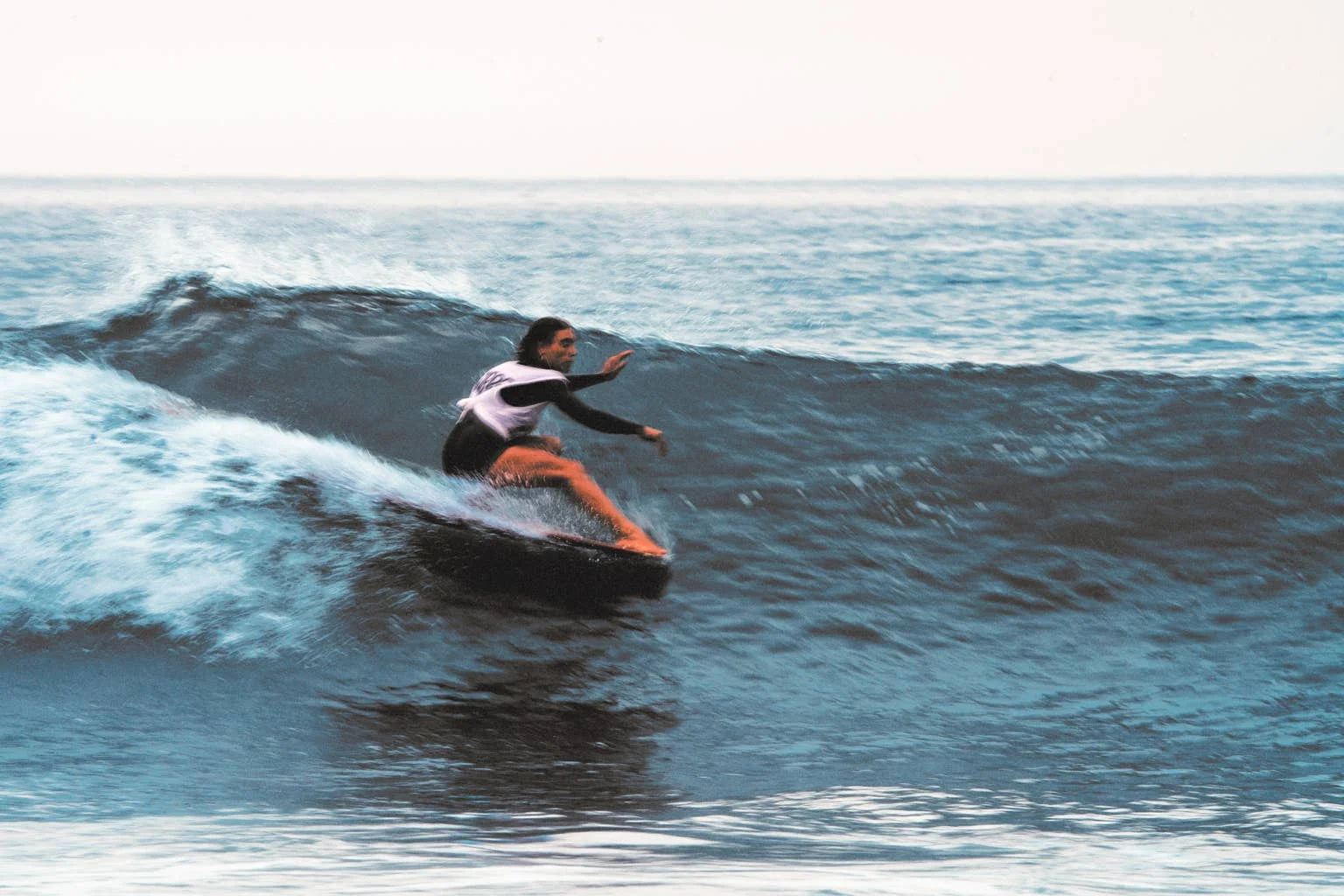
The surf program draws an international group connected by traditional board craft and single-fin surfing. Their equipment may share a broad design language, but each surfer brings a different approach to the wave. Some turn with force, throwing spray or driving toward the next section. Others keep their movements spare, trimming and walking the board with fine control.
Ambre Victoire stood out for how her style matched the conditions. Longtime festival photographer Simon Fitz said, “Everyone is amazing, the talent is ridiculously high. But this year, I think Ambre’s style was the most expressive for the conditions. She really stood out to me.” His comment points to the quality that makes the surfing compelling: not simply technical ability, but the way a rider interprets a particular day in the water.
Simon Fitz
Simon Fitz
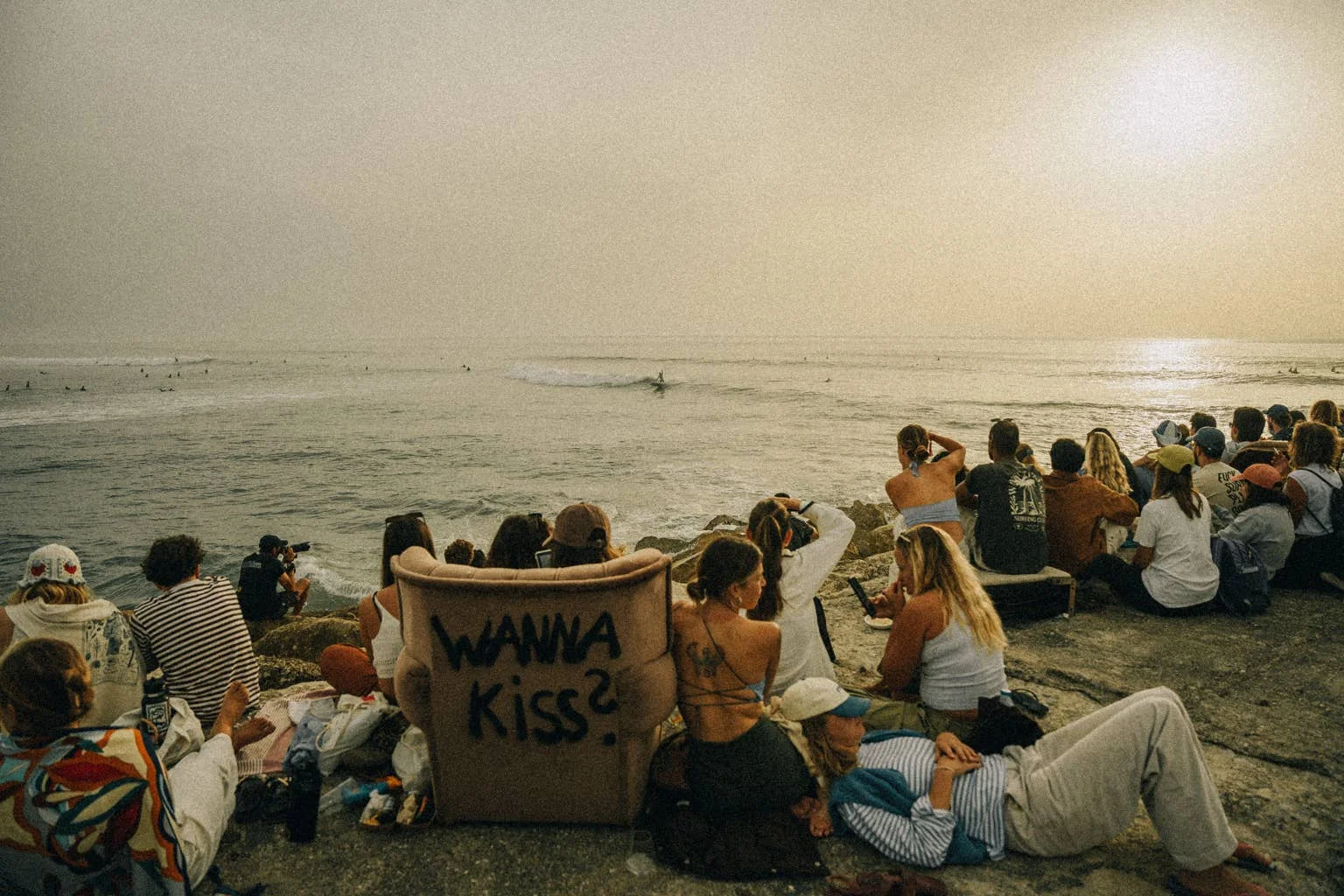
The jetty is the festival’s natural gathering point. Hundreds can watch the steady swell at Cabedelo, talk with friends or meet someone new, with commentary switching between Portuguese and English. The announcers provide useful context and jokes; music fills the pauses. Since the surfing isn’t framed as a contest with a winner, the crowd can follow the action at its own pace.
Simon Fitz
From a beach gathering to an international crowd
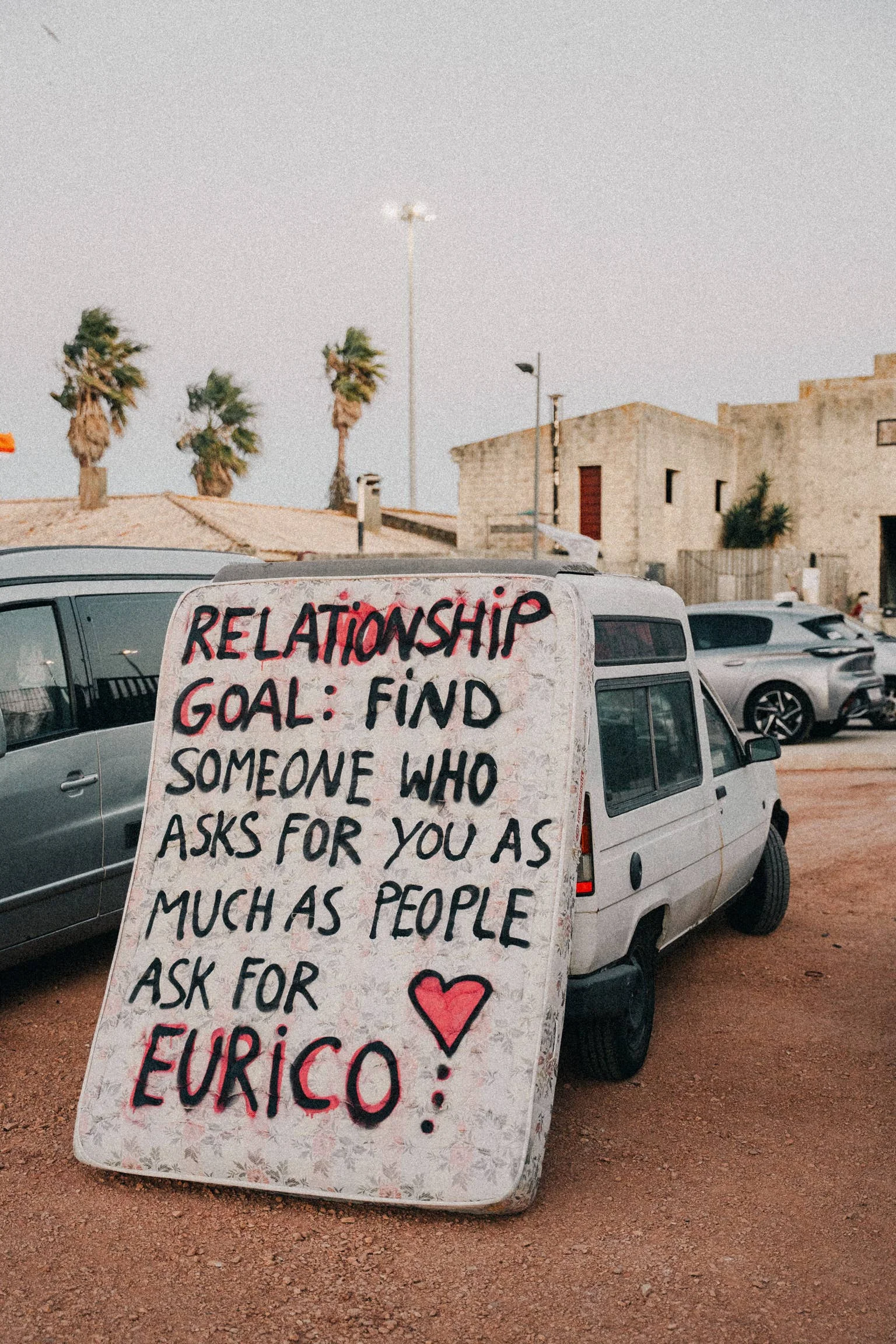
The event began on a much smaller scale. The night before the festival, surfer Beau DiFiore spoke with local Teresa Folhadela in a shaping bay. Folhadela remembers the early gatherings from her childhood: a community surf and beach day followed by a feast in Auto-Peninsular, a 1940s garage. The group behind those first events included Eurico Gonçalves, Kiki, Bocó, Barbas, Márcio Oliveira, Careca and Miguel Figueira.
Their aim was to share the pleasure of surfing and celebrate life before colder weather arrived. They also wanted, in their words, to be “inspiring the next generation.” That aspiration still fits an event where younger surfers and artists meet longtime locals, and where the older community remains present rather than becoming a footnote to the festival’s growth.
Simon Fitz
Today, thousands travel from around the world to attend. Many are between 18 and 50 and work in surfing, music, art or clothing, but the gathering extends well beyond those scenes. Local residents over 50 come to reconnect with the people who started it or simply spend time by the water. On one late ferry crossing, a group of local women in their sixties were still laughing together at 4:30 a.m.—a small scene that captured how broadly the event’s social circle reaches.
Chris Dodds
The festival’s most revealing moments happen offstage
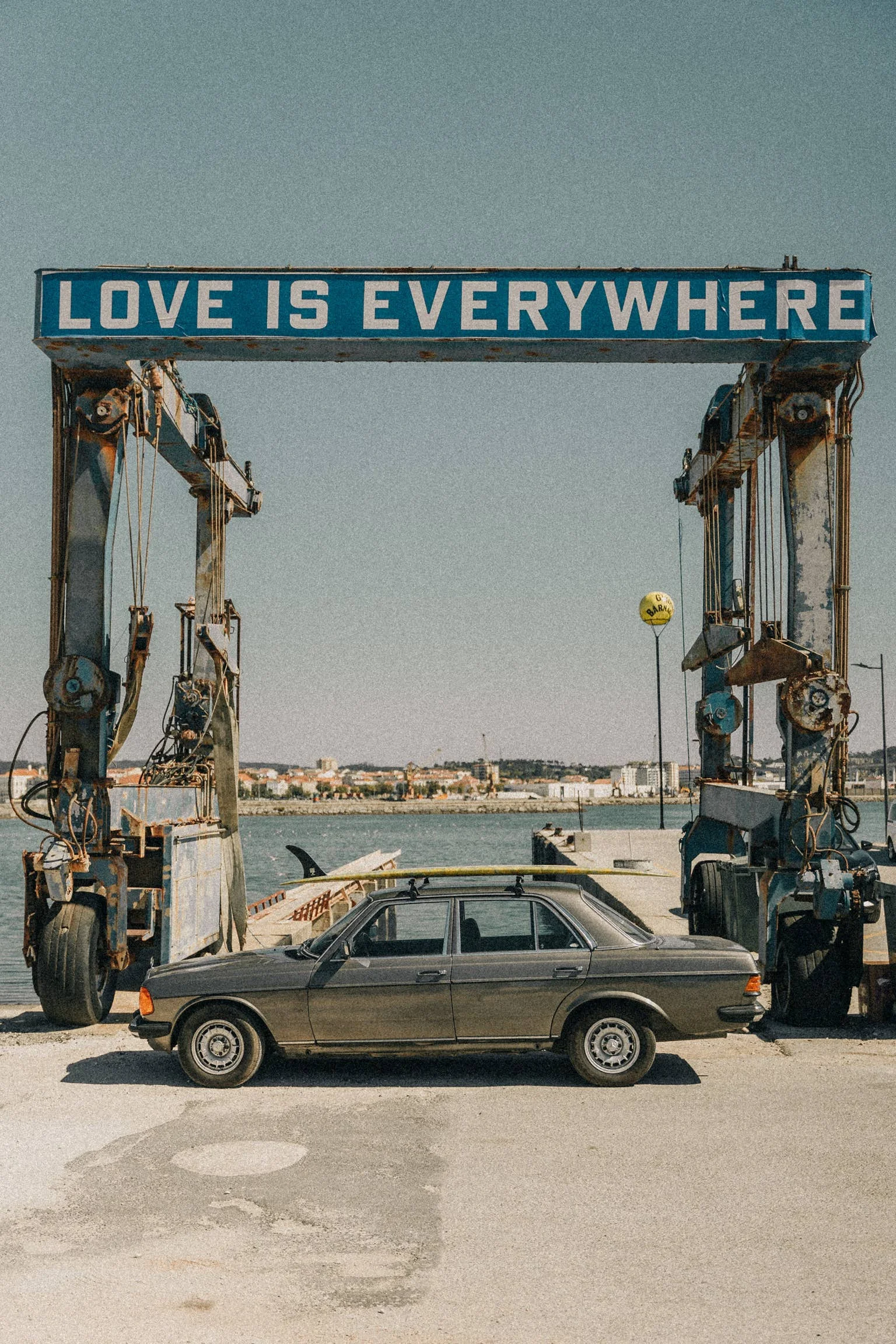
Gliding Barnacles’ appeal is easiest to understand in the unplanned exchanges around the official program. After the final dinner, a group headed home in photographer Simon Fitz’s vintage Mercedes. It was Sunday evening, and the passengers were worn out after a late Saturday that had stretched into the early morning. On the way, they spotted Matt Correia of the Allah-Las, who had spent the weekend at the festival and was waiting for a ride.
Fitz stopped and offered him a lift. In the car, Correia was simply another friend heading home; outside, the passengers were fans of his band. That shift says something about the event’s social texture. The people on stage, in the water, behind the scenes and in the crowd share the same spaces, and a conversation can matter as much as a scheduled performance.
Simon Fitz
The Allah-Las didn’t perform, though the friends in the car hoped they might at a future edition. Whether or not that happens, the scene captures what Gliding Barnacles has built: a festival where surfers, artists, musicians, cooks and spectators can share the same evening without being confined to their usual labels. Its next gathering in Portugal will test whether that easy exchange can continue as the crowd grows.
Simon Fitz


