A paddle session after the swell
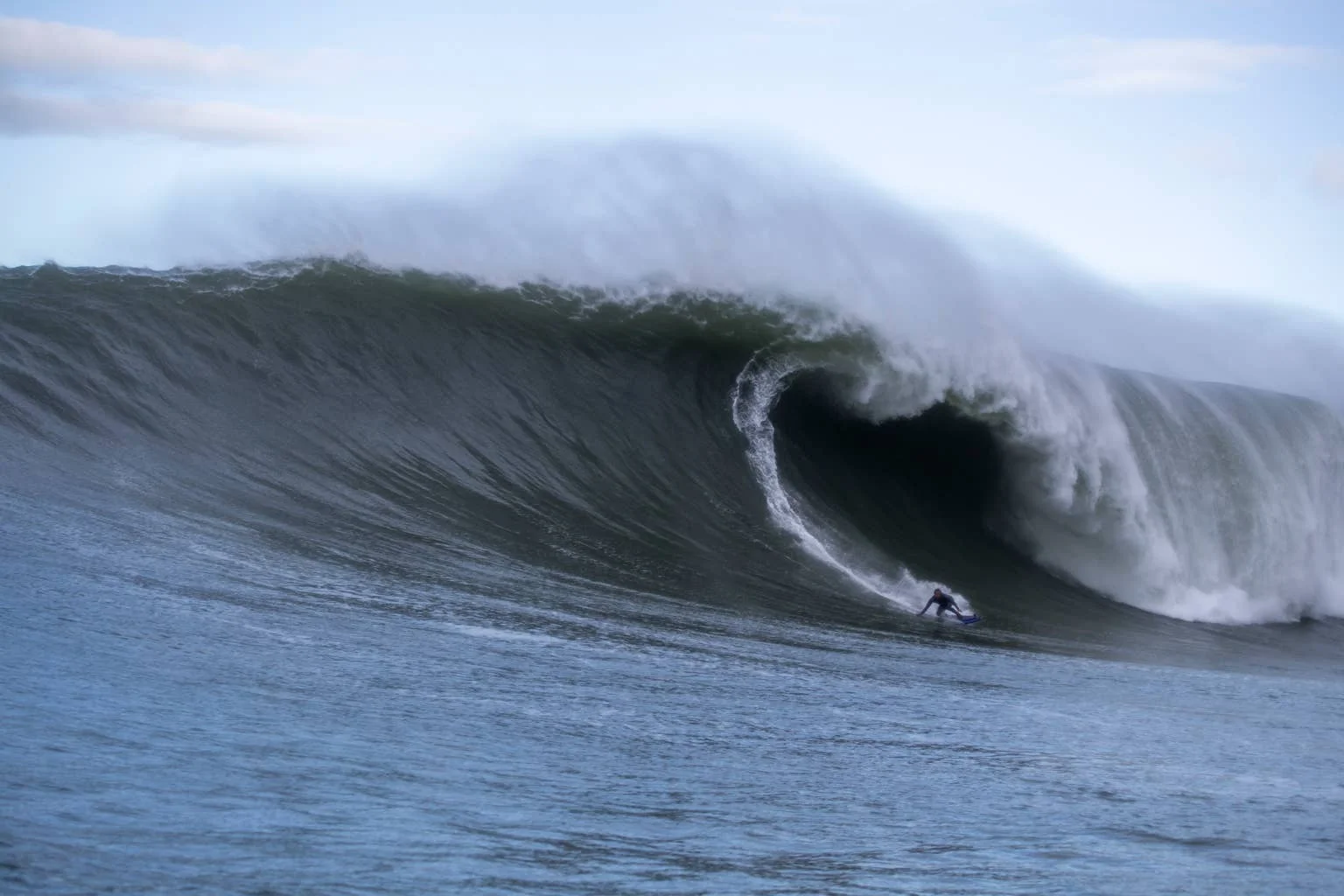
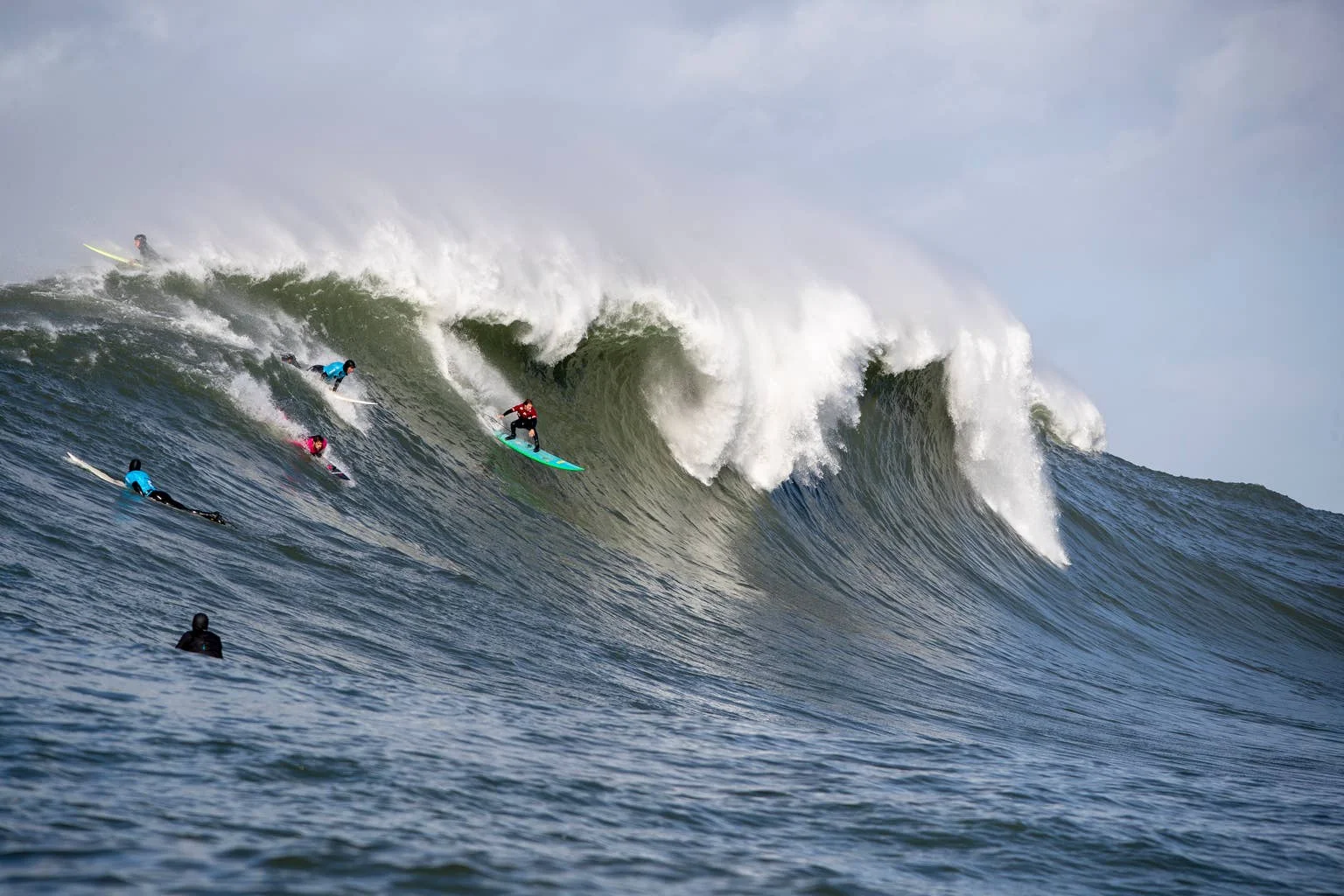
Maverick’s served up a demanding paddle session on Monday, November 16, after a powerful weekend swell eased and the ocean cleaned up. Several of the world’s leading big-wave surfers stayed in Half Moon Bay, trading tow boards for larger paddle boards and taking on the break under their own power. The shift changes the challenge: without a tow-in assist, surfers must generate their own speed and position themselves to catch a wave that may offer little time to react once it stands up.
The conditions had eased from the weekend’s peak, but “more manageable” doesn’t mean forgiving at Maverick’s. A cleaner ocean can make the shape of a wave easier to read, while the size and force of the break still leave a narrow margin for error. That combination made Monday less a repeat of the tow session than a different test of judgment, timing and control.
Banks finds the standout wave
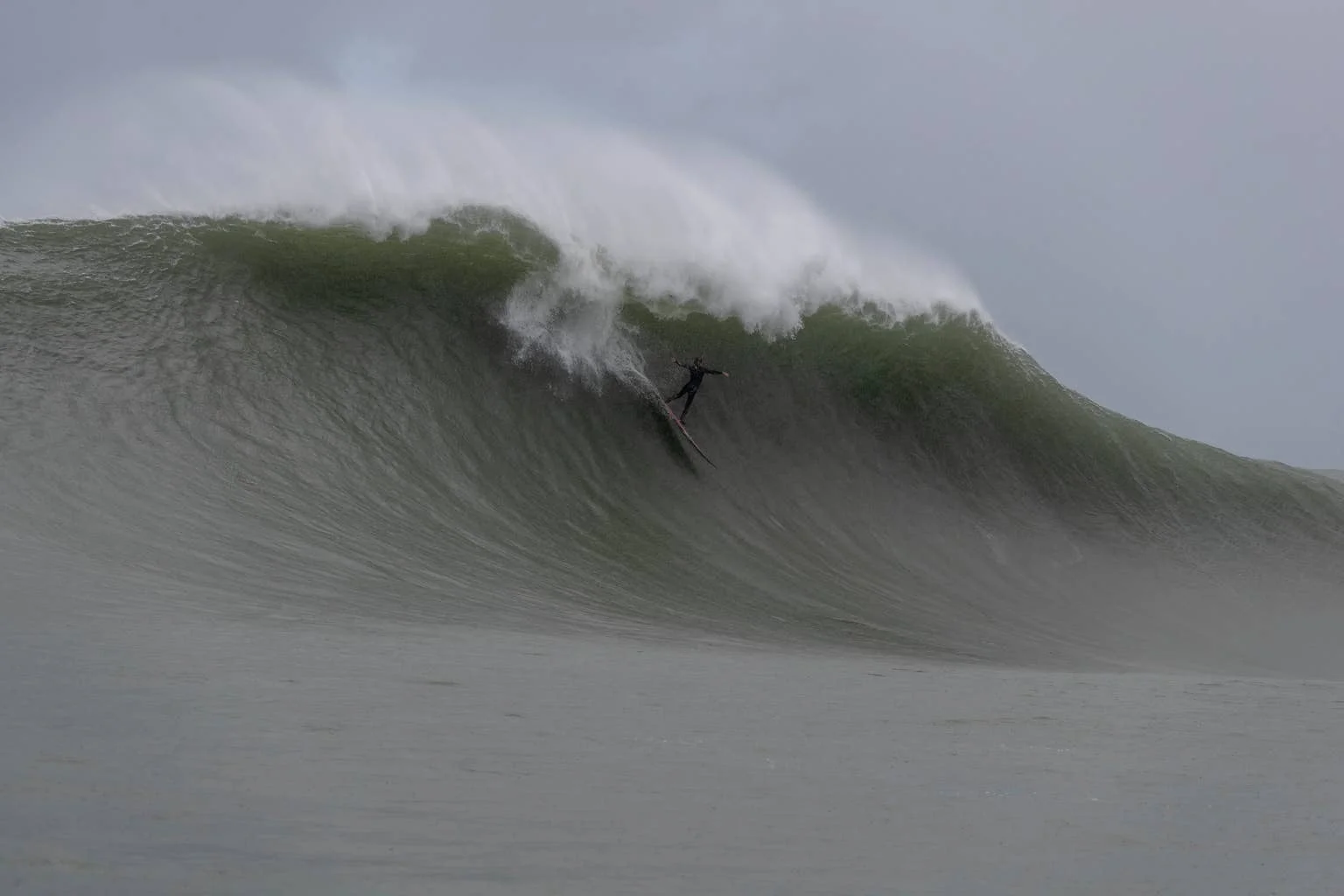
Local surfer Willem Banks drew the day’s biggest attention with a steep, deep drop into the bowl. He made it to the bottom, nearly lost control, then rode on one leg before the wave closed over him. The ride had the ingredients that make a standout at Maverick’s: commitment through the drop, a recovery under pressure and a finish that left little room for correction.
This is more significant than it looks. Staying upright through a moment of imbalance doesn’t make the wave safe; it shows how quickly a successful ride can turn into a survival problem on a heavy break. Banks’ one-legged recovery was brief, but it captured the fine margins of a day when even a well-positioned surfer can lose control.
Fred Pompermayer
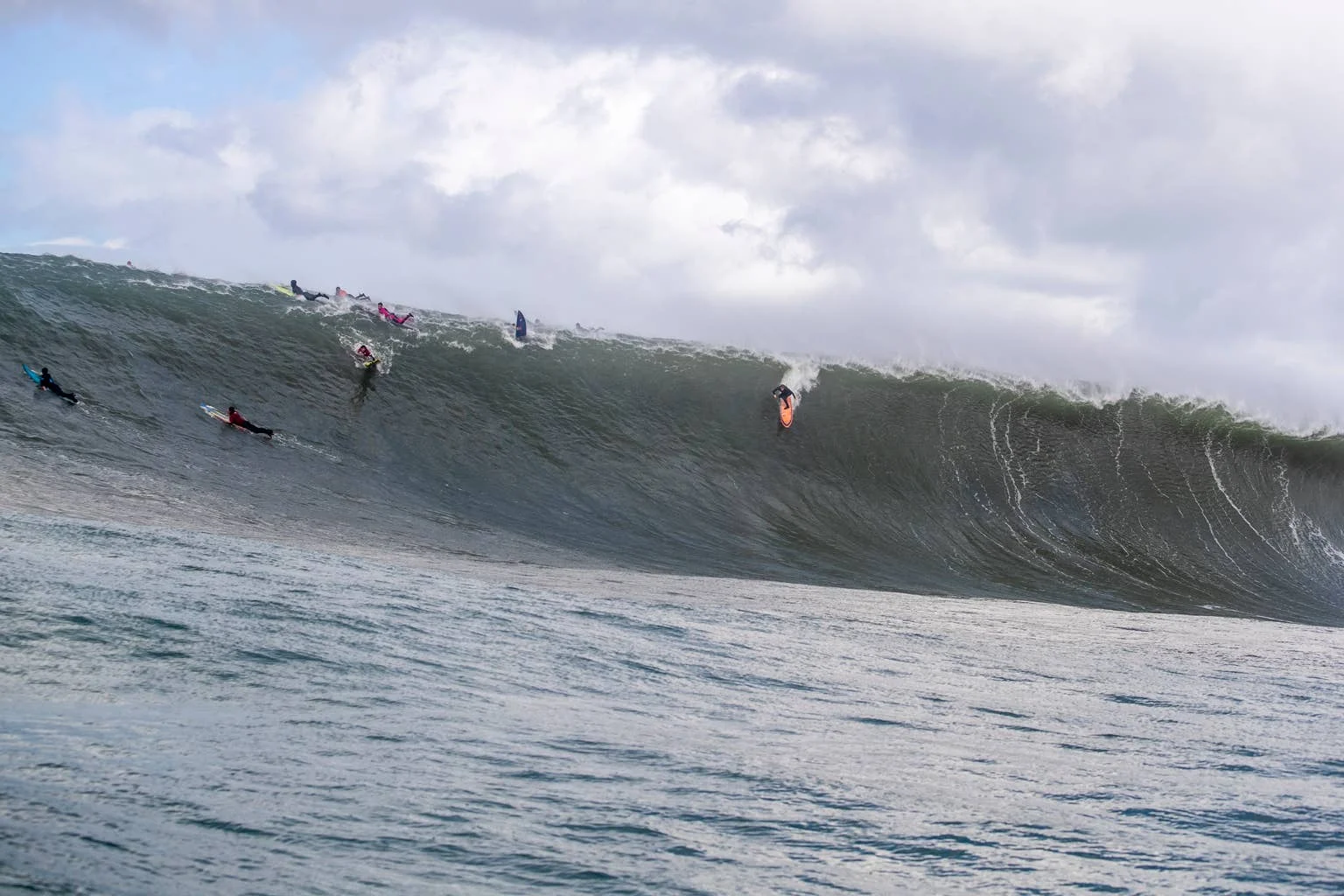
Hawaii’s Jacob Turner faced a sharper introduction. On his first visit to Maverick’s, he tried to cut across a left and tuck into the tube. The wave detonated over him before that line could develop, a quick lesson in how little time a surfer may have to adjust once a heavy section begins to break.
For a first-time visitor, the attempt also shows the difference between recognizing a possible line and knowing how the break will behave beneath it. The left offered an opening, but the wave’s force closed it quickly. Maverick’s can punish an ambitious read even when the plan is clear. (And this is the part most people overlook.)
Fred Pompermayer
Big names return for another session
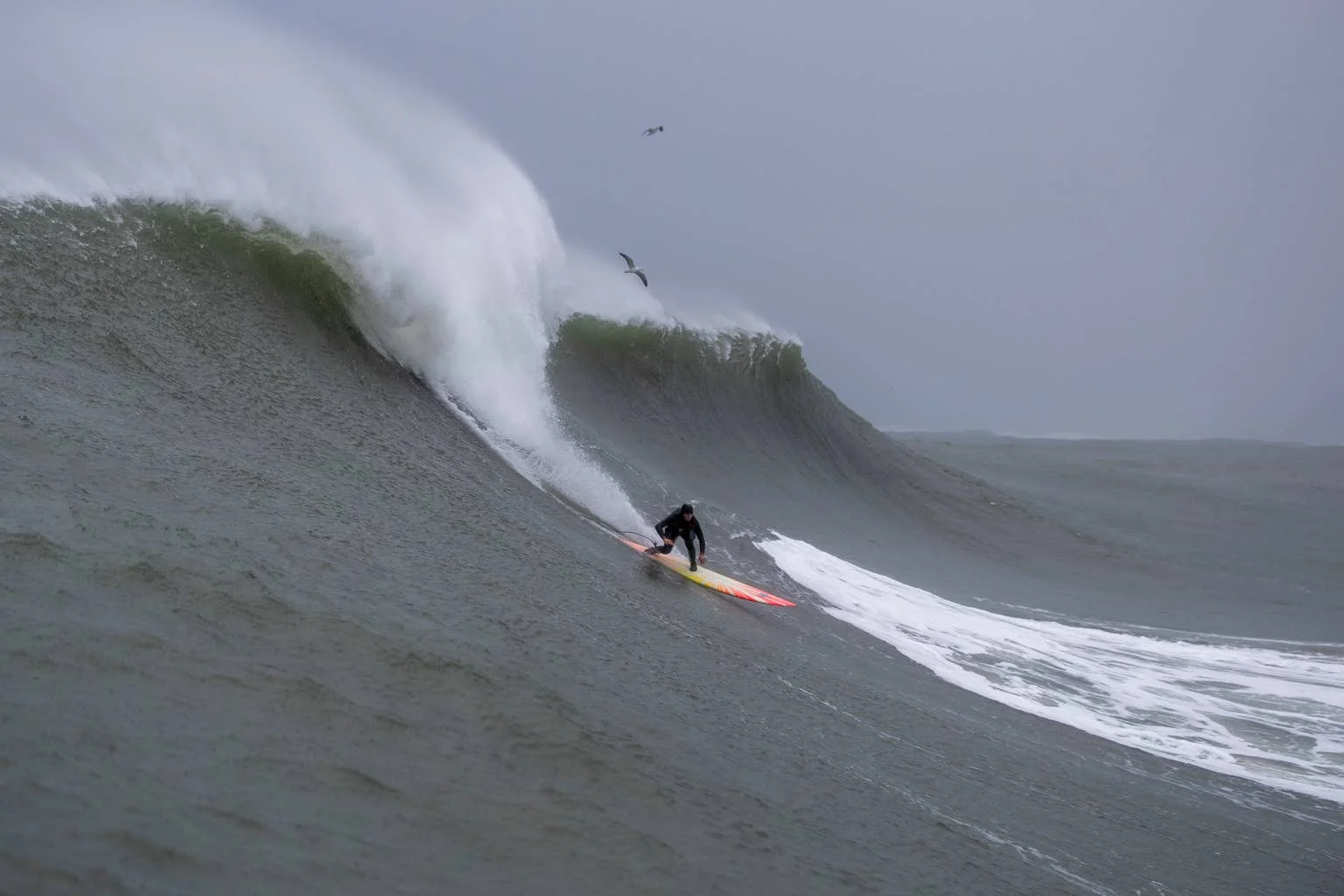
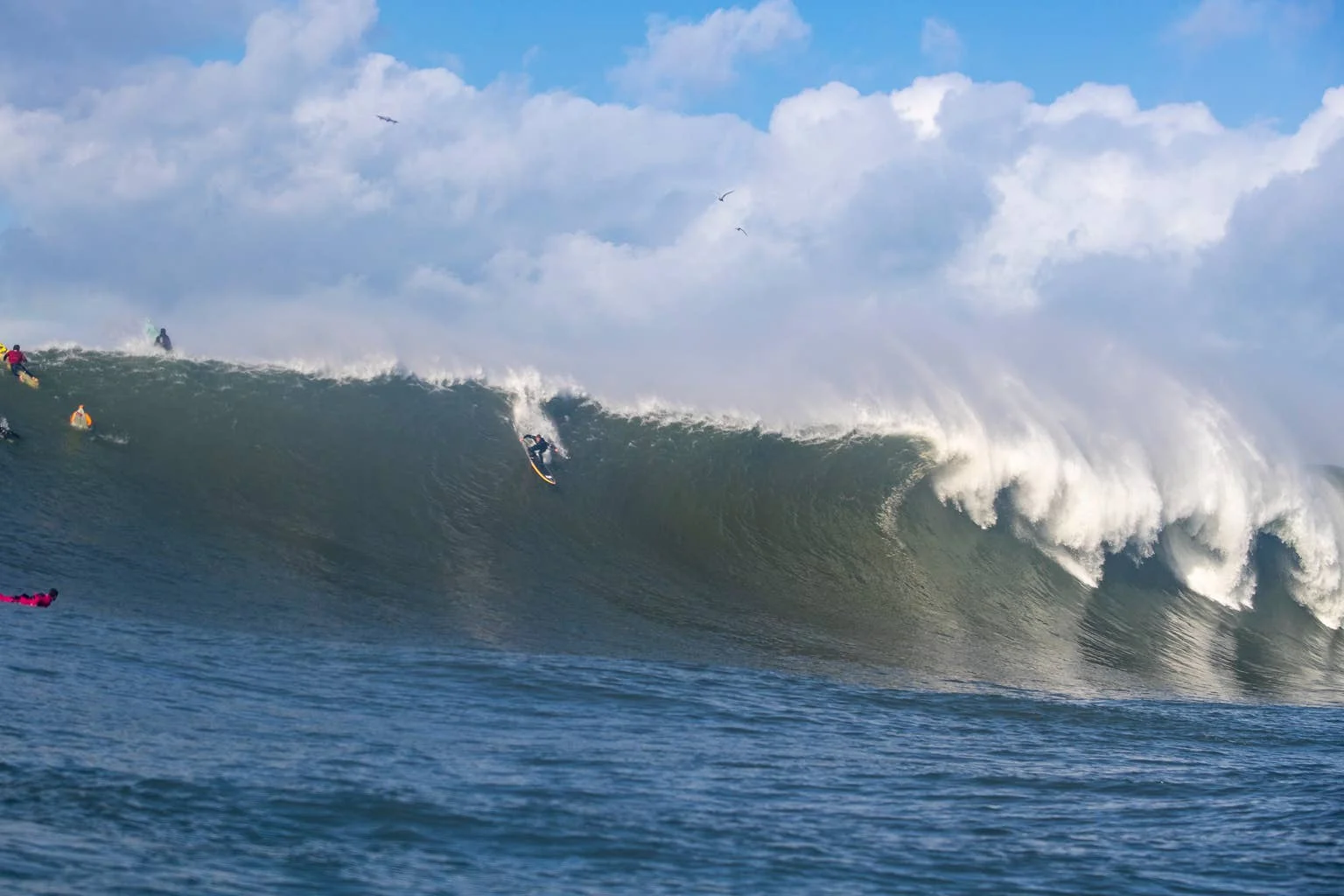
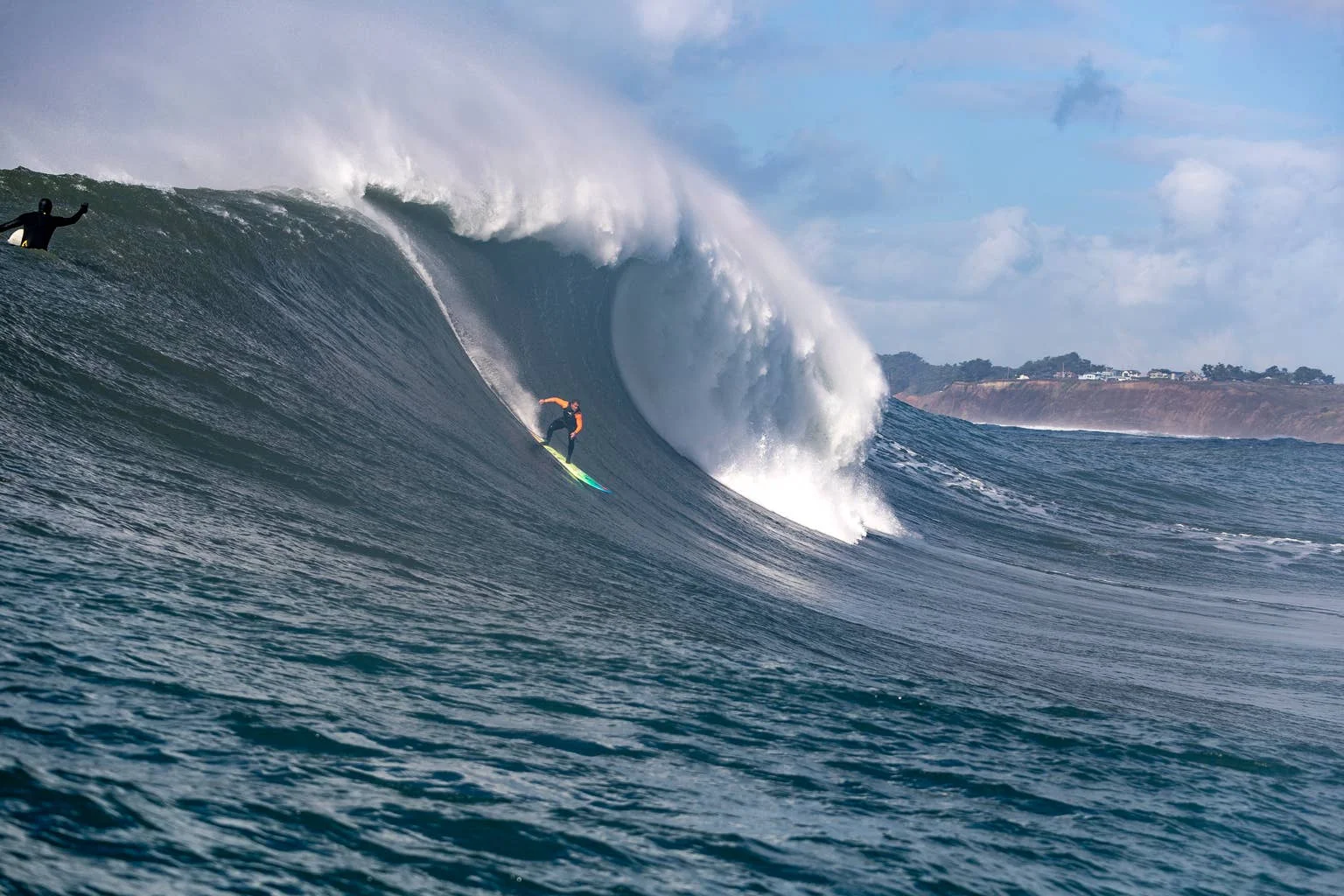
Kai Lenny, Luca Padua, Alo Slebir, Bianca Valenti and Jojo Roper were among the surfers in the lineup. Their presence gave the session a mix of familiar big-wave experience and different approaches to the same basic problem: finding a wave they could paddle into, then holding a line as it moved toward the bowl. In a lineup like this, reputation doesn’t remove the need to read each wave on its own terms.
Lenny, known for taking on oversized waves by tow, showed he can paddle into the break’s more manageable bombs. That distinction matters because tow surfing and paddle surfing ask for different choices about speed, positioning and commitment. Valenti brought her characteristic style to a wave building toward the bowl; her presence also reflects her role in advancing women’s big-wave surfing. A visible place in a demanding lineup helps make that progress tangible, though one session can’t stand in for the broader work.
Fred Pompermayer
Fred Pompermayer
Fred Pompermayer
Fred Pompermayer
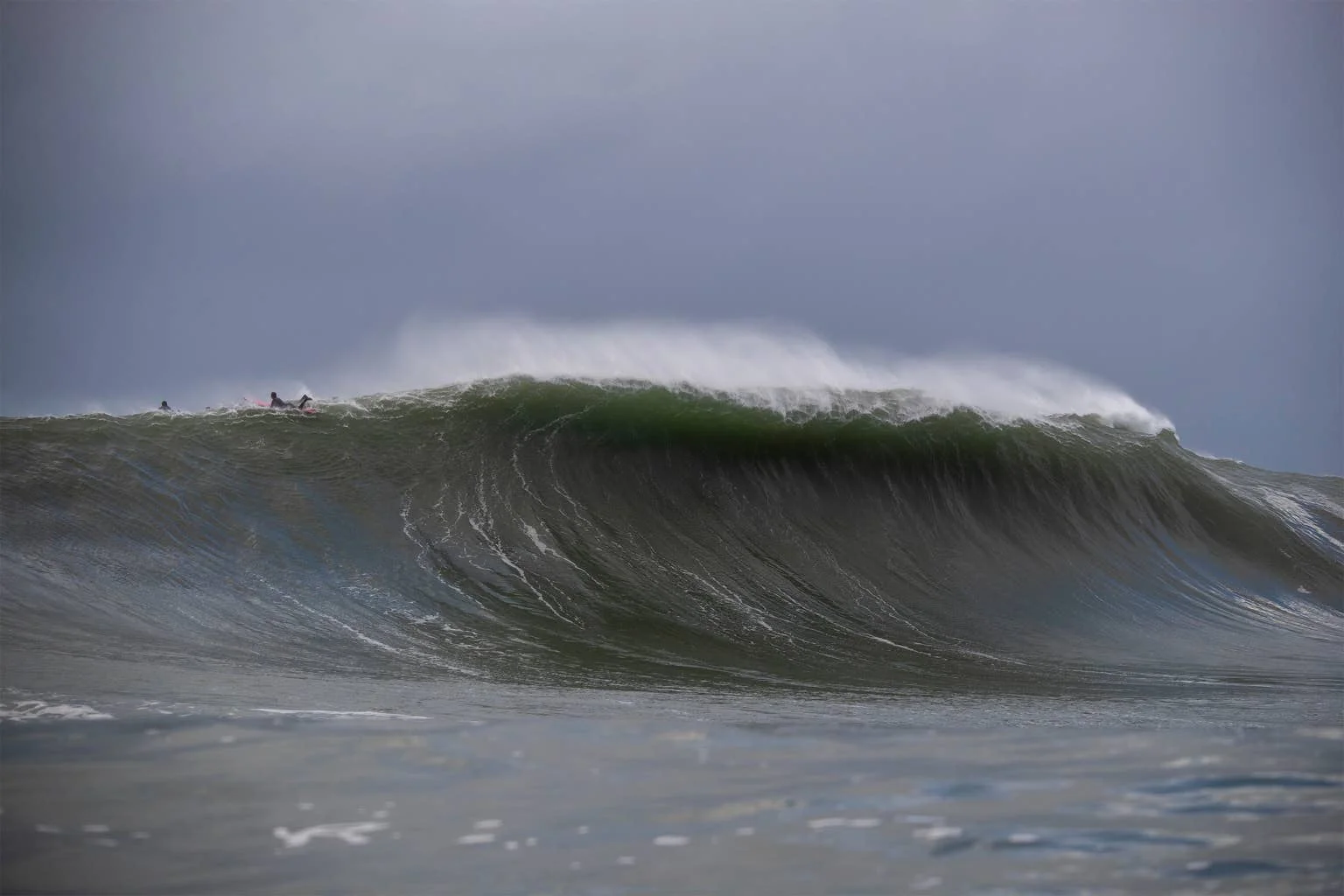
Photographer Fred Pompermayer, who was also in the water for Saturday’s swell, documented the session. The lineup offered a reminder that at Maverick’s, choosing which waves to leave alone can matter as much as committing to a takeoff. A wave that looks tempting from one position may be poorly timed or too difficult to escape once it begins to break.
That restraint is part of the skill, not a pause in it. In powerful surf, surfers have to weigh the possible ride against their position, the wave’s shape and the consequences of getting caught inside. If you’re working in this space, the session’s quieter lesson is that good judgment often leaves no dramatic photograph.
Fred Pompermayer
Fred Pompermayer
Another swell on the horizon
Long-range forecasts point to another round of swell reaching Maverick’s around Thanksgiving. It’s expected to be smaller than the recent run, though still likely to bring waves. Forecasts at this range point to a possibility, not a guarantee, and conditions at the break will determine whether surfers get another useful window.
With winter still about a month away, this early stretch of powerful surf has set a forceful tone for the 2026/27 El Niño season. The immediate story is a change in scale and method: after a powerful weekend, Monday’s surfers tested themselves under their own power in cleaner, more manageable surf. And yet. A smaller forecast doesn’t erase the risks that shape every decision at Maverick’s; it simply shifts the question from how big the waves will be to whether they’ll line up for another paddle session.