Buffalo's man-heavy look is giving Omar Cooper Jr. room
No team has played more single coverage over the last month than the Bills, who have done it on 56% of their snaps. That's a lot of one-on-one exposure for a secondary that has had trouble in the middle of the field. Heavy man coverage is a double-edged choice. It lets a defense keep its best cover players on the perimeter and avoid giving up help over the top, but it asks corners to win without a safety nearby. When a defense leans this hard on one look, the offense doesn't need a clever play call to find an edge. It just needs the right matchup to keep showing up.
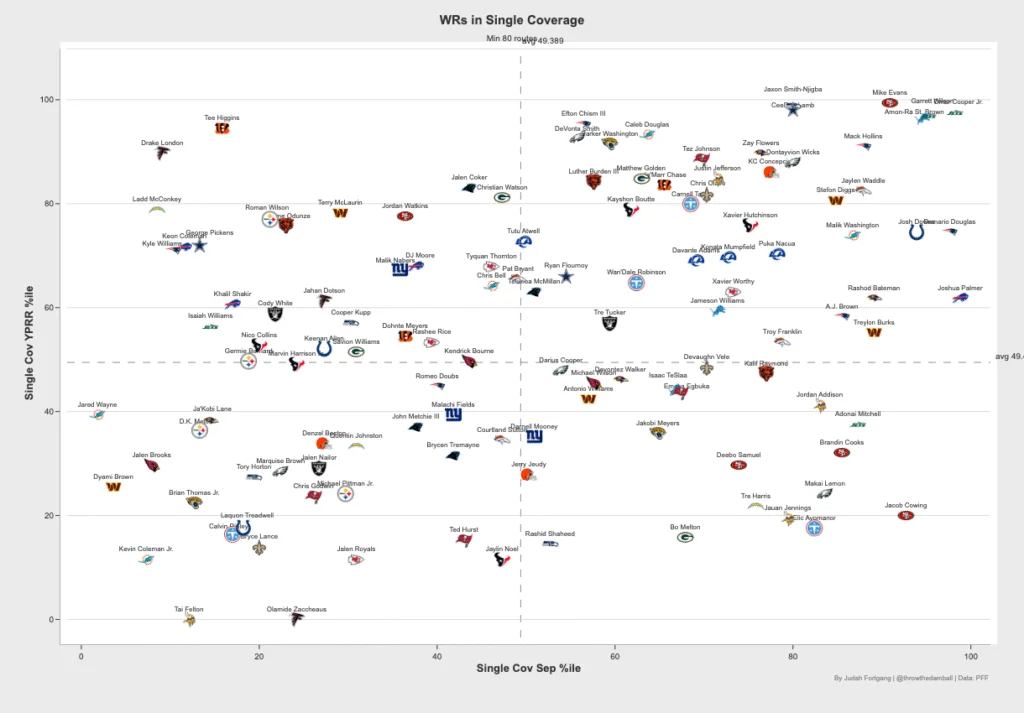
Rookie Omar Cooper Jr. is the Jets receiver most likely to cash in. He ranks in the 98th percentile in both separation and yards per route run against single coverage, and he's earned a target on nearly 25% of his routes against that look. Those are elite marks for a first-year player. My read is that New York's best path to yards in this game is a steady diet of short and intermediate throws to him, not just one shot downfield.
Here's the thing: percentile rankings can look dazzling, and a rookie's numbers against one coverage type deserve some skepticism until they hold across more looks. What matters more is the route tree and the timing of the throws. Separation is the skill that tells you a receiver can win without help, and a team facing this much man coverage should want that skill on the field early. If you're tracking this matchup, watch whether New York builds its early script around Cooper or treats him as a bonus option once the first read falls through.
The slot is where Buffalo really hurts. Opponents have attacked Bills slot defenders at the fifth-highest rate in the league, and Buffalo has allowed the second-most explosive plays from that alignment. (and this is the part most people overlook) the slot is often where defenses hide their least-trusted coverage player, because it draws less attention than the outside corners. That's a problem when the offense is built to work underneath. With an offense that should score against the Jets, Cooper should see plenty of volume if the game script stays on track. Bad news for Buffalo.
Seattle's backs have a clear runway against Las Vegas
The Seahawks are thin at quarterback. Sam Darnold is out, and Drew Lock is banged up. That's a rough spot for any offense, because a run game can only carry so much when defenses know the passing threat is limited. Last week Seattle leaned hard on the run, calling it about 10% more often than expected once game situation was factored in. Lock didn't attempt a single pass that traveled more than 17 yards downfield, which tells you how the staff is managing this offense. Seattle isn't trying to win through the air right now, and the play calling reflects that.
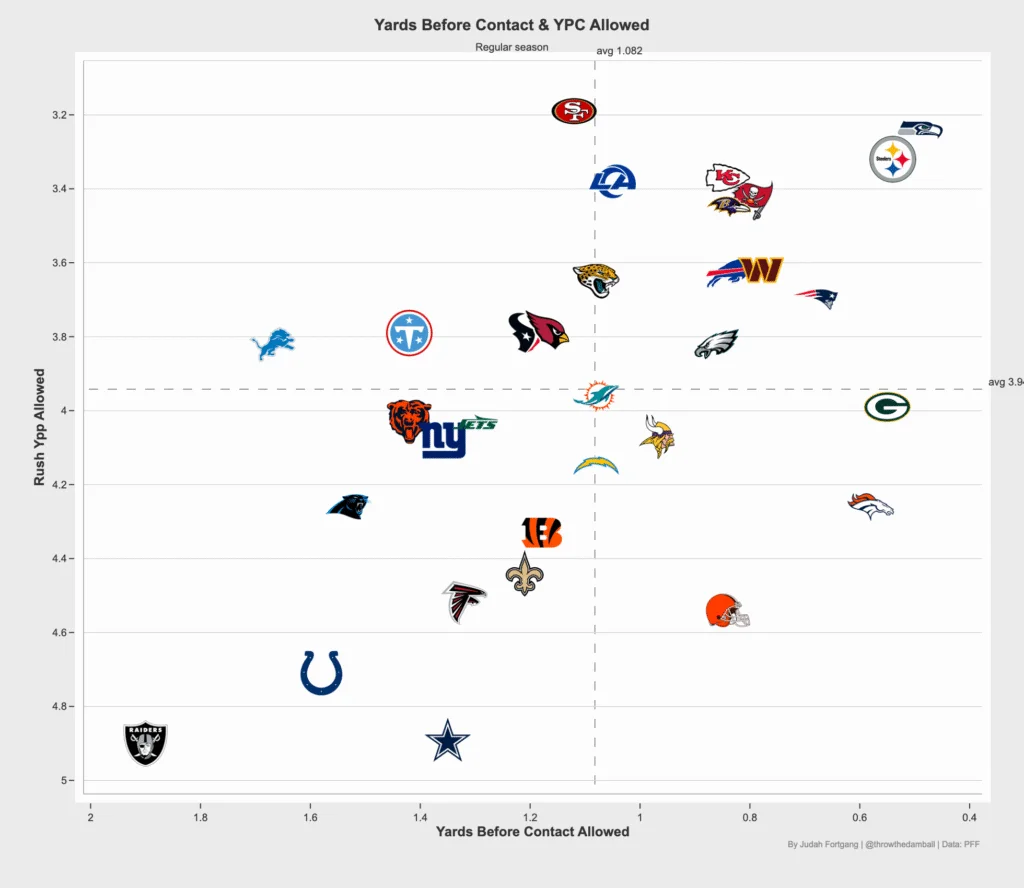
The matchup suits that approach. The Raiders allow by far the most yards before contact in the NFL, and that's pushed them to surrender the most yards per carry of any run defense in the league. That combination is unusual. Defenses that give up yards before contact often have trouble at the second level, and that's where a back with good vision starts to earn his keep. Seattle's backs have struggled to find room on their own, but Zach Charbonnet and Jadarian Price have been solid after contact. The space should be there before contact, which means the job is mostly about getting the first level of the play right.
Rookie Fernando Mendoza makes his first start against what may be the NFL's best defense. That's not an ideal setup, and it likely means short drives for Las Vegas and more snaps for Seattle's offense. Charbonnet should handle the bulk of the work at roughly a 70-30 split. Price, though, is the more explosive runner, and he should get enough touches to make that gap matter. Splits like this look tidy on paper and get messy once a game turns, so I'd treat the 70-30 figure as a starting point rather than a promise.
Bryce Young and Jalen Coker fit New Orleans' coverage tendencies
The Saints play both single coverage and single-high safety looks at top-five rates in the league. That's a telling pairing. Single-high safety looks put one deep defender in the middle of the field, which can leave the outside and intermediate areas thinner than they look on the snap. Jalen Coker has been productive against both. He ranks above the 80th percentile in yards per route run against each look, leads the Panthers in targets against both, and commands a 27% target share against single coverage. Those splits suggest he's winning on the route, not just getting schemed open by a favorable call.
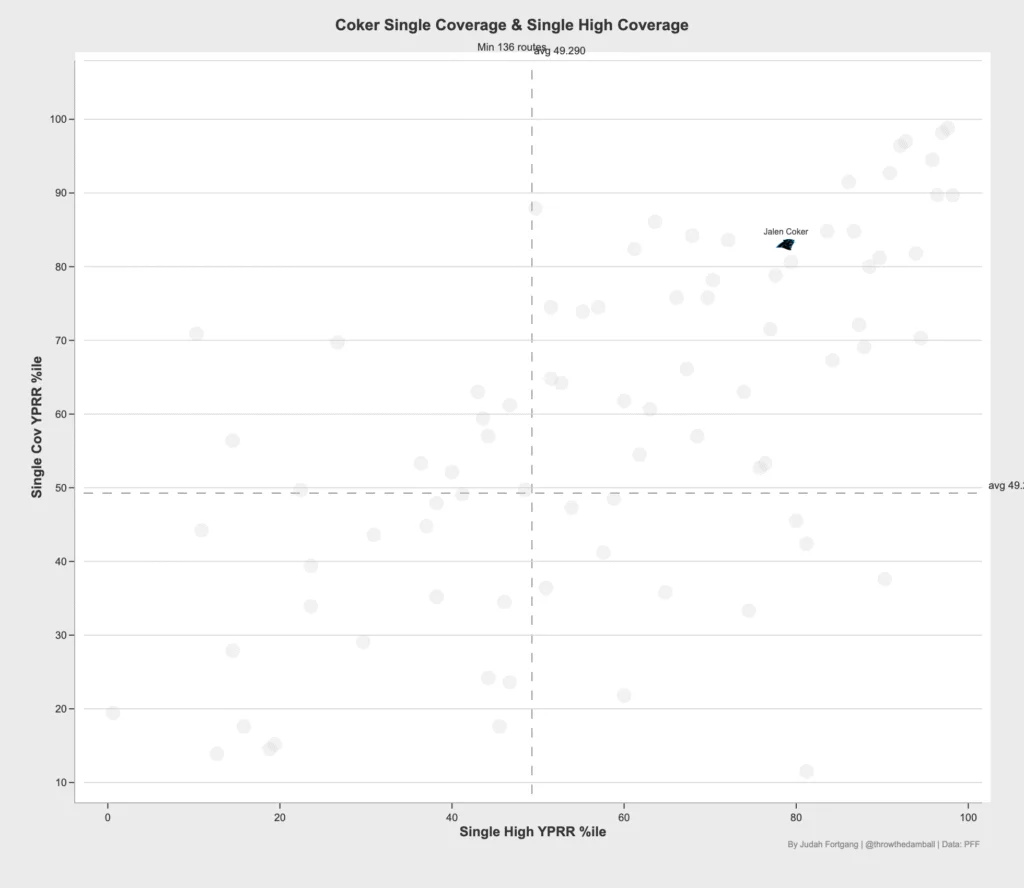
That profile lines up well with Bryce Young's passing game. Coker is the clearest beneficiary of New Orleans's coverage habits, and Carolina's offense looks set up to lean on him. Watch the early series: if Young is connecting with Coker against single coverage in the first quarter, the Saints will have a real problem on the other side of the ball. Early looks tell you whether the plan is working, and I'd argue they matter more than the final box score. A quarterback who finds his best target in the first few drives usually keeps going back to him.
What these matchups say about the bigger picture
Taken together, these three games point to the same idea: defenses are choosing coverage shapes that create one-on-one matchups, and offenses are choosing receivers and runners who can exploit them. That's more significant than it looks. Heavy man coverage is a bet that your best cover players will win their individual reps, and when that bet fails, the failure is usually concentrated in one spot on the field. The slot in Buffalo's case, the middle of the field in New Orleans's case, and the run fits in Las Vegas's case all share that pattern.
That said, matchup data is a snapshot, not a verdict. Percentile rankings and target shares depend on how often a player faces a given look, and a few weeks of data can overstate what a player will do against a different defensive plan. Coaches adjust, and defenses that get exploited tend to change their shell quickly once the tape circulates. Nothing here guarantees the same results next week, and anyone reading these numbers should keep that in mind.
If you're working in this space, the useful takeaway is the method, not any single prediction. Start with coverage frequency, then check where the damage actually happens: outside, in the slot, or before the line of scrimmage. Then look at whether the player on the receiving end has the traits to win that specific rep. Do that consistently and you'll spot advantages faster than the people who only read the headline stats. Not a sure thing. But a far better starting point.


