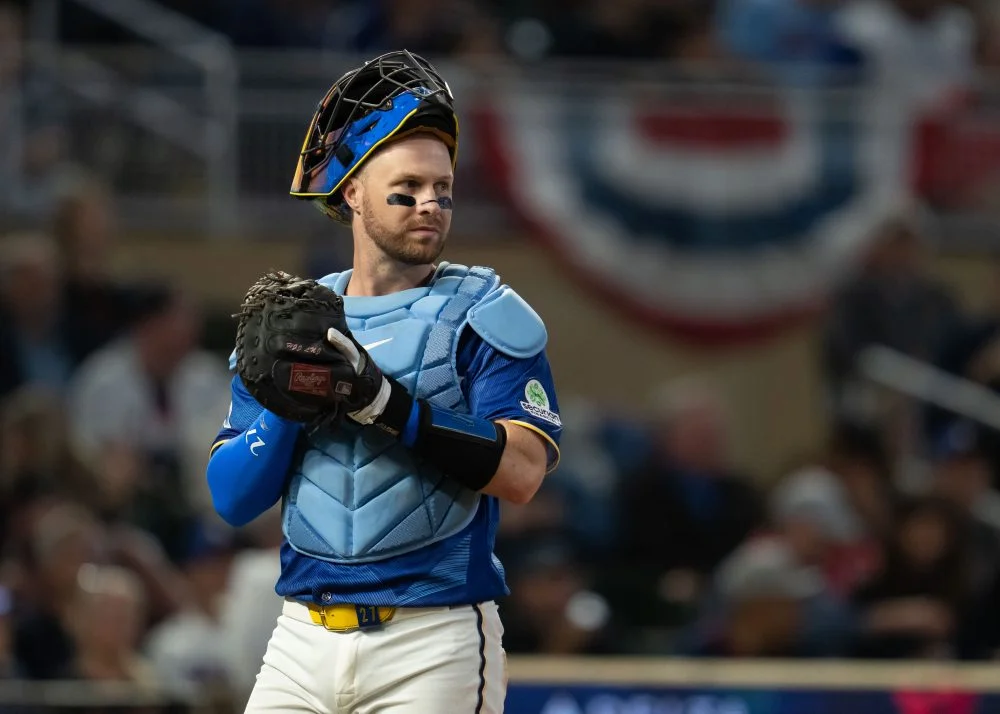
This offseason didn't need extra layers of uncertainty, but it has them. Teams are working around a looming lockout and a free-agent class that's weak on top of it. Executives have been nearly unanimous in saying nothing unusual is going on, and that's probably the right public line. Still, the hot stove is going to be less predictable than usual. Some of the moves coming over the next few months will look inscrutable. They won't be irrational so much as the products of people trying to act sensibly in a market that feels like it's sliding toward chaos.
Lockouts have a way of compressing decision-making into a narrow window. When a front office knows normal roster building could stop on a set date, it either pulls deals forward or freezes, and both reactions look strange from the outside. Here's the thing, though: observers usually see the transaction and never the reasoning behind its timing. That gap between what happened and why is where most of the confusion lives.
There's a second source of noise that has nothing to do with who's available this winter or whether a salary cap follows an 80-day blackout. Throughout the minors this season, run scoring tilted sharply toward offense. That's a real problem for anyone trying to pull meaning out of a stat line. When the environment inflates hitting in one park and suppresses it in another, a gaudy number might mean less than it looks, and a bad one might mean more.
Context is doing a lot of work
Brewers president of baseball operations Matt Arnold has spent the season fielding that problem with some of his most important prospects. Andrew Fischer's pursuit of 50 homers, Braylon Payne's power breakout and Bishop Letson's 4.85 ERA all have to be read against the same shifting backdrop. "You try to take into account so many different things in the environment, with the ballpark, the wind, the baseball, the player, all the things that are happening, and hopefully, we can weight those appropriately," Arnold said. He added that ballparks change over time, sometimes because a wall goes up in right field and alters the wind. Teams can adjust for those factors, but they can't adjust for all of them.
If you're working in this space, whether as an analyst, a scout or someone who reads box scores closely, you've probably heard environment waved away with a phrase like "small sample." Minor league conditions make that dismissal harder to justify. Wind, weather, the ball itself and wall dimensions all vary, and none of them show up cleanly in a standard stat line. That said, the people building these models know it. The hard part isn't acknowledging the variables. It's deciding how much each one matters, and that answer shifts from park to park and season to season.
Arnold's point about walls is more significant than it looks. A single fence change can alter how fly balls carry, and a club that moves a wall mid-development can make two seasons of data hard to compare. (And this is the part most people overlook: the prospect often doesn't know the wall moved, and his approach may already be drifting before anyone in the front office writes it down.)
Everyone would prefer to evaluate process rather than results. Process is harder to fake and easier to project. But when the stat lines are this slanted, they can also distort how a player sees himself. A hitter who can't trust his slash line may chase a different approach, and that adjustment can go either way. Even an evaluator who can look past the numbers doesn't control what the player takes from them.
Scouts have always preached that process beats results in the minors, and this season's environment makes that advice harder to ignore. The problem is that process is also easier to misread through a distorted lens. A player's swing decisions and contact quality don't change because the run environment did. The signals teams use to confirm those things, though, can get muddied fast.
The mental side of the gap
Red Sox president of baseball operations Craig Breslow framed the challenge well. "I think every team is trying to chase upstream the underlying ability that leads to performance," he said. "What is really, really difficult to quantify is the emotional impact on the physical performance as a result of confidence being down because of a changing run environment, or willingness or unwillingness to challenge in the strike zone." That's the part that spreadsheets struggle with. Teams still lean heavily on scouts and coaches to fill the space between what a player's talent suggests and what they actually showed on the field.
Breslow's second sentence is the one I'd underline. Confidence is hard to measure, and it's harder still to separate from the environment that shaped it. A hitter whose numbers look weak in a league that's otherwise inflating offense might start pressing for hard contact, or he might get passive and stop swinging at pitches he'd normally attack. Neither reaction shows up cleanly in a box score, which is why it's so easy to miss.
That's where scouts and coaches earn their salaries. They can say a swing looks sound even when the line says otherwise. The catch is that scouting judgment is also subjective, and it can drift toward whoever already carries a strong reputation in the room. A good evaluator knows this about himself. A mediocre one doesn't.
My read is that this offseason will reward the clubs that do that filling-in most honestly. Expect front offices to put more weight on whether a prospect's results match his tools and mechanics, and less on any single eye-catching number. The players who stand out may not be the ones with the biggest totals. They'll be the ones whose gap between projection and performance makes sense once you account for the environment.
What this means for the next few months
Here's where I'd put my attention. The lockout uncertainty is real, but the source material doesn't offer a reliable read on how it resolves, and I won't pretend otherwise. What's more useful is recognizing that teams facing constrained timelines and muddy evaluations will make choices that look odd in isolation. If a club moves a player the public thought was core, don't assume the front office lost its mind. It may simply be reading the same noisy environment differently.
The prospect evaluation question matters just as much. If you follow a farm system closely, the stat lines you see this season are a starting point, not a verdict. Ask what the ballpark did, what the wind did, and whether the player's approach changed in ways the box score can't capture. Then ask whether the hitter's own belief in his swing is intact, because that belief is the part no park adjustment can fully repair.
And yet, the offseason will still produce conclusions, and some of them will be wrong. That's the nature of evaluating young players in a shifting environment. The sensible move is to treat every eye-catching line with some suspicion and to ask what it would look like under different conditions. Skepticism here isn't cynicism. It's just doing the arithmetic that the headline numbers skip.


