Laurie Towner’s Equilibrium makes its case through a sharp contrast: one moment, he’s losing control above the steps at Tasmania’s Shipsterns Bluff; the next, his narration is calmly weighing the value of staying positive. The film’s tension comes from that gap between what big-wave surfing demands and the balance Towner tries to bring to it. That’s the hook, and it’s a good one. Most surf films lean on spectacle and assume the audience will supply the meaning. This one doesn’t.
Filmed primarily by Harry Dott and edited by Ishka Folkwell, the latest film from needessentials follows Towner across heavy surf, family life and a six-week journey along Morocco’s coast. It’s a portrait of a surfer whose idea of a good day extends well beyond the waves he catches. The film moves between big water, home and travel rather than sticking to one thread, and that’s the point. If you’re expecting a straight highlight reel, you’ll notice how much of it sits between the sessions.
Composure at Shipsterns Bluff
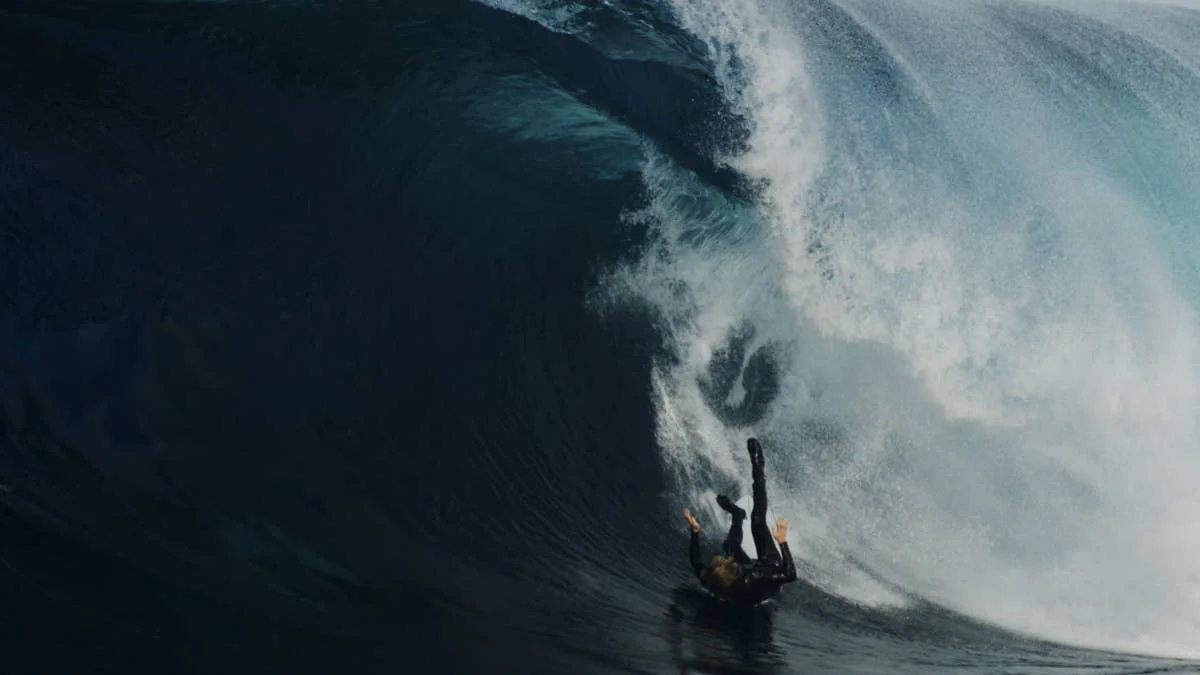
The opening wave at Shipsterns is an uneasy entry point. Towner loses control going over the notorious step and appears headed toward a violent wipeout, while his voiceover reflects on the mindset that has carried him through life. It’s a smart way to open. You’re asked to hold your breath before you’ve been told why the wave matters, and that’s roughly the feeling big-wave surfing produces in people watching from the beach.
“It’s gotten me way farther through life than being negative and competitive,” he says. He knows the consequences of surfing those conditions can be severe, but he also describes the patience and judgment required to wait for a wave that suits the moment. The next one arrives as a clean right: a hollow tube without the step, which Towner rides with control. Here’s the thing: the contrast only lands because the film doesn’t pretend the danger is gone. Shipsterns has a reputation as a serious wave, and the film treats it that way.
Tim Bonython
That shift gives the film its central idea. For Towner, reading conditions matters, but so does how he approaches the people and places around him. “Being respectful and being kind have a huge part to play in that,” he says. He describes positivity as an energy that comes back to you, while leaving room for the feeling to remain hard to explain. I’ll admit I’m skeptical of anything that sounds like a self-help slogan, especially in a sport where the ocean doesn’t care about your attitude. But Towner doesn’t push it as a formula. He frames it as something he can’t fully explain, and that restraint keeps it from reading as a pitch.
A wider measure of a good surf
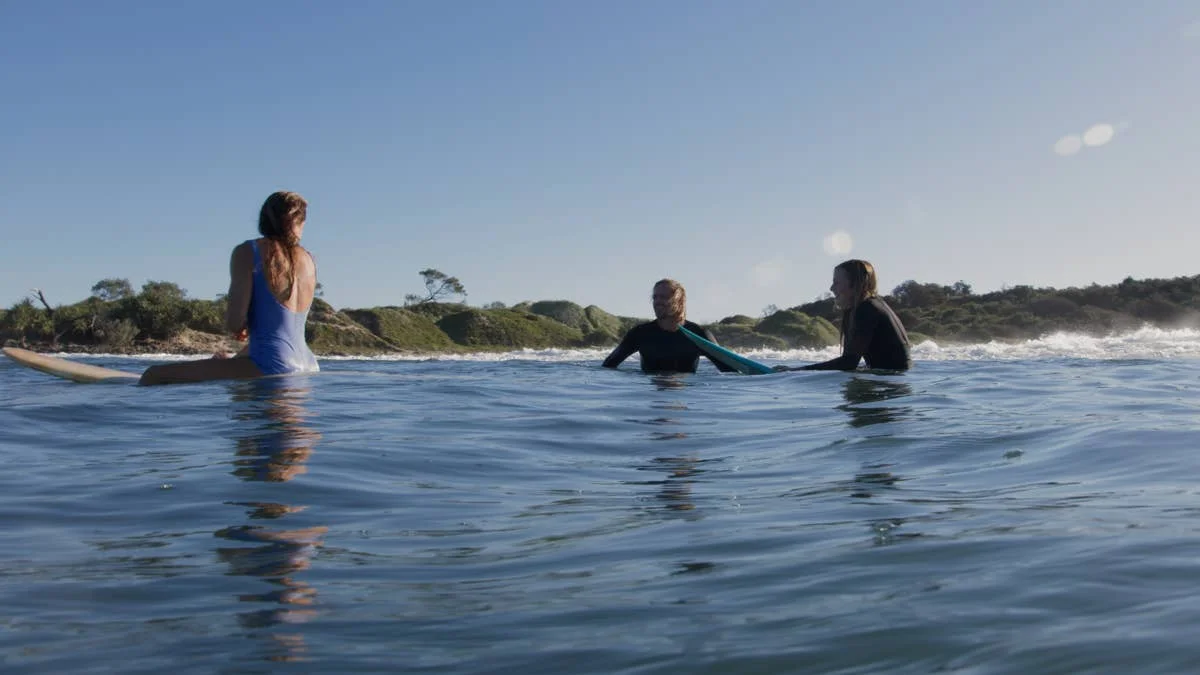
Towner has been a father for more than a decade, and fatherhood has changed what he counts as a rewarding session. He says watching his children surf can bring him more joy than catching waves himself. Sometimes, helping his family get into the water is the best surf he’s had in months. That’s a striking thing for a surfer to say on camera, and it’s the film’s least performative moment. Surf media often treats the personal best as the measure of a good day. Towner’s version is quieter and, honestly, more believable.
Harry Dott
His work at needessentials also connects his everyday life to surfing. In a design role, Towner helps develop products, tests new wetsuits on trips and continues to refine them. He values the hands-on work, and says making things gives him a sense of reward that can get lost in the routine of earning a living. He also sees continued learning as part of staying engaged as he gets older. Plenty of people in the water hold full-time jobs, and the gap between a surfer’s public image and a working life is often wide. Here, the two overlap instead of competing, which is less common than it sounds. (And this is the part most people overlook: the testing happens on real trips, not in a lab.)
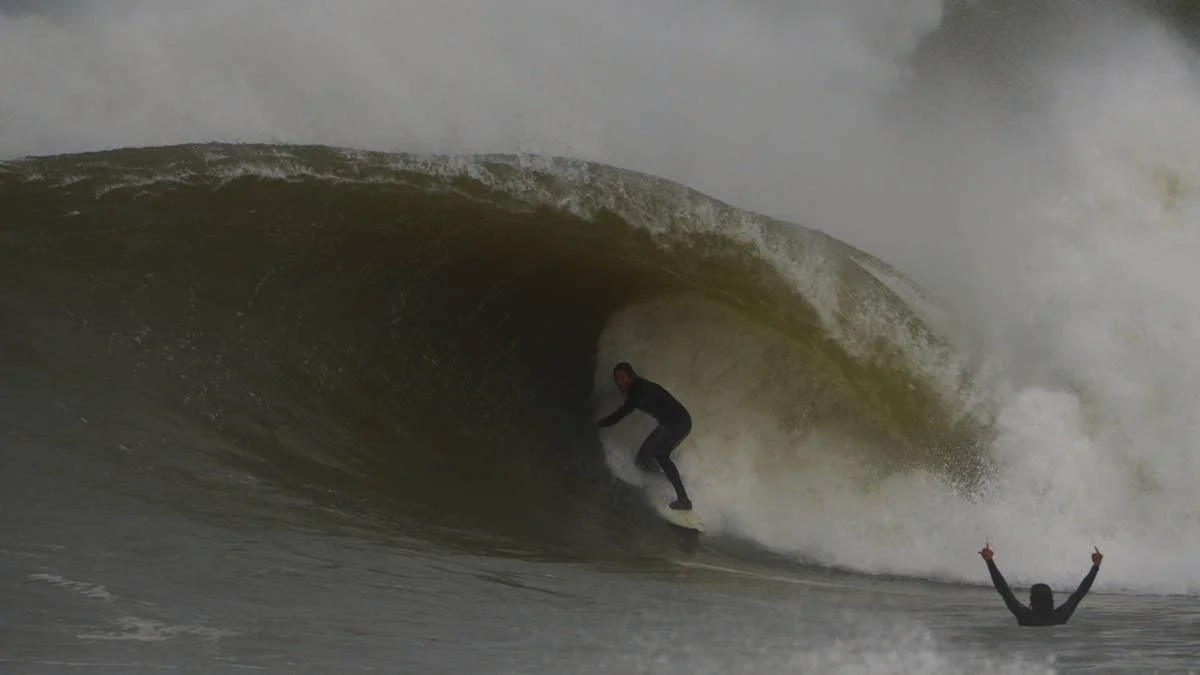
That mix of work and family makes room for surf travel. Equilibrium documents Towner’s six weeks on Morocco’s coast, where he finds tubes and spends time immersed in North African culture. The trip brings the film’s different threads together: travel and heavy waves matter, but they sit alongside the quieter satisfactions of making, learning and being present with family. Travel films often slide into postcard territory, with the local culture reduced to backdrop. Without seeing more of the footage, it’s hard to say whether this one avoids that trap. What’s clear is that the framing puts Towner’s relationship with the place next to his relationships at home.
Zakaria Adli
The film’s strongest takeaway is that Towner’s relationship with surfing isn’t measured only by the wave he rides. From the edge of Shipsterns to a family session before school, his version of equilibrium leaves space for both the risk and the ordinary moments that make a life around the ocean worth pursuing. That’s the argument, and it’s a fair one. The film is less interested in proving how brave he is than in showing what he’s protecting.
What this means for surf films
Here’s the bigger question: what does a film like this do for the genre? Big-wave films usually sell the moment of danger, and the audience’s reaction is the payoff. Equilibrium shifts that payoff toward the decisions surrounding the danger, like when to paddle, when to wait and how a surfer treats the people around him. That’s a harder sell and a more interesting one. It also asks more of the viewer, who has to care about the person before the wave means anything.
If you’re working in this space, whether you’re making films, writing about surfing or just watching it, there’s a lesson here about pacing. The move from wipeout to clean tube works because the viewer has to sit with uncertainty first. Not every film needs that structure, and I wouldn’t expect a flood of copies. Still, the approach shows that a surf film can carry a personal argument without losing its physical edge. That’s worth more than another slow-motion barrel shot. Not a small thing.
What this means for the people who watch it is simpler. Viewers who come for the waves will get them, and viewers who come for the story will get more than they expected. Whether that balance lands depends on how much patience the audience brings. The film doesn’t need you to agree with Towner’s philosophy, but it does ask you to take it seriously. Given how much of surf culture runs on bravado, that’s a modest ask and a useful one.


