A stoppage driven by the injury
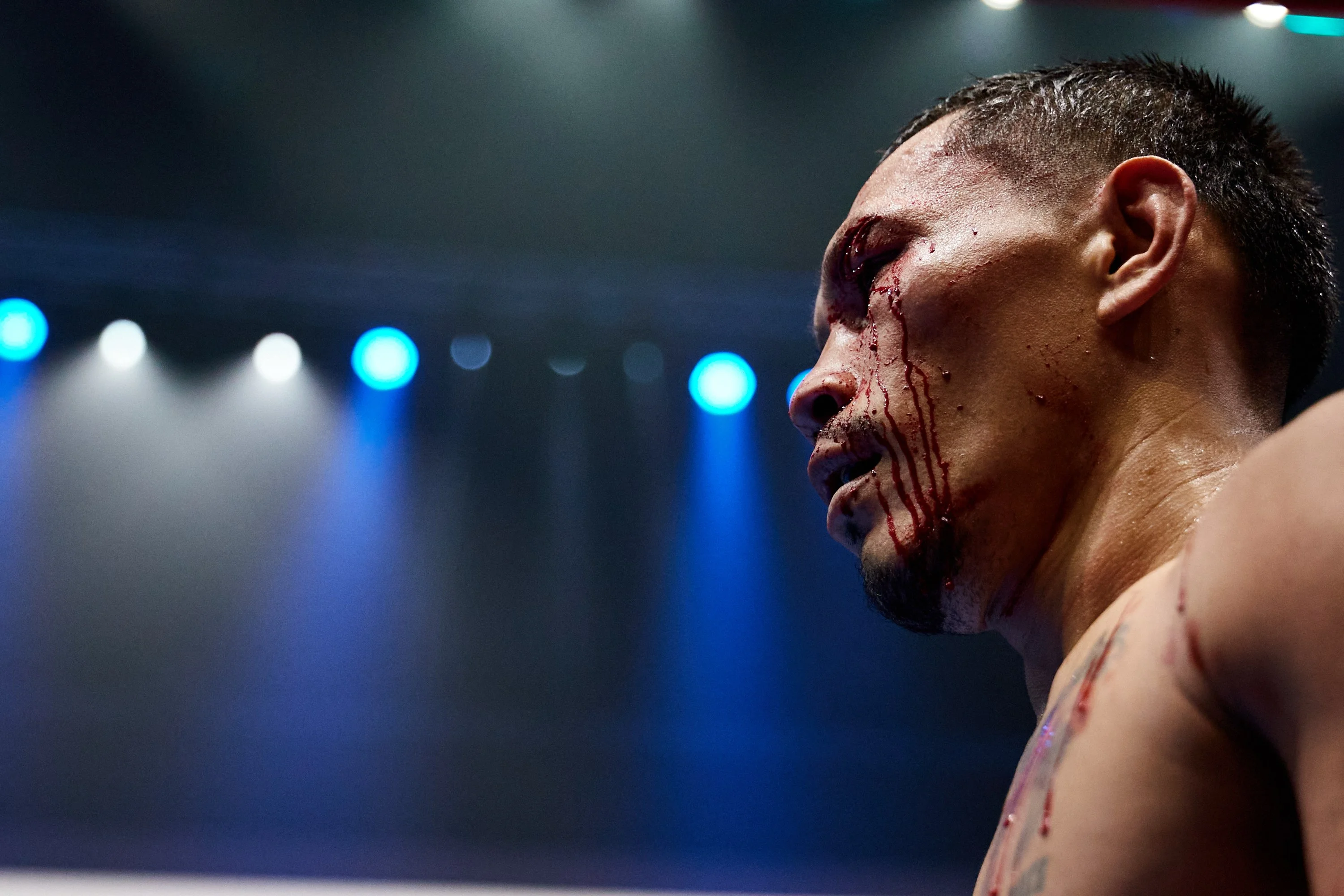
The stoppage of Ricardo Blandon against Rafael Espinoza turned on anatomy, not appearances. Ringside doctor Neil Scott says Blandon’s brow muscle had torn down to the bone, blood vessels were exposed and blood covered the white of his eye, leaving him unable to see. A further punch, Scott judged, could have triggered an arterial bleed.
The distinction matters because boxing injuries are often judged in real time, with the referee and ringside doctor weighing what can be seen against what may happen if the action continues. Blood can make a wound look catastrophic, but the visible amount alone doesn’t tell the full story. Scott’s account centers on the structures involved: the brow muscle, vessels near the eye and Blandon’s impaired vision.
The WBO featherweight title bout took place in Riyadh, Saudi Arabia, on the undercard of Saul “Canelo” Alvarez’s win over Christian Mbilli. Blandon, a Nicaraguan late replacement, had stepped in only days earlier after Lorenzo Parra withdrew. Espinoza was controlling the fight when a right hand opened the cut with just under two minutes left in the third round.
That context makes the call harder to assess from a broadcast alone. The late substitution and the early timing of the stoppage may shape how viewers interpret the bout, but neither answers the medical question: what would another exchange do to an injury already affecting the eye? The decision rested on the condition Scott saw at ringside.
Why Scott called for the stoppage
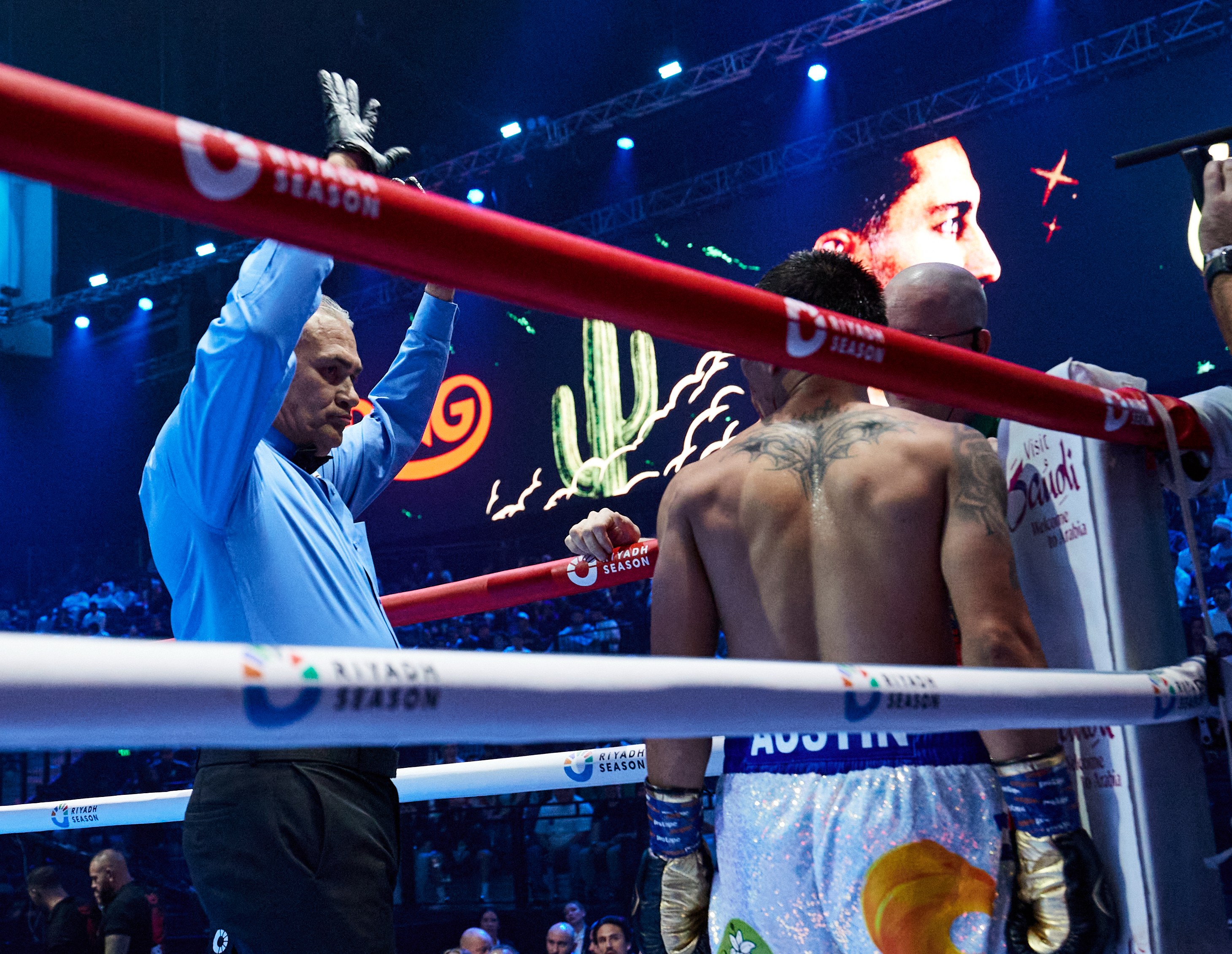
Scott examined Blandon after referee Janny Guzman initially directed him to the red corner. The doctor said he could see bone through the wound. Its depth alone didn’t require an immediate end, he explained, but its position and the damage underneath changed the risk.
That distinction is central to ringside medicine. A deep cut may be manageable if it can be treated and doesn’t compromise a fighter’s ability to protect himself; a wound near the eye can raise a different set of concerns. Here, Scott described damage extending beyond the skin, which meant the issue wasn’t simply whether a corner could temporarily slow the bleeding.
The cut sat below Blandon’s eyebrow, extended onto his eyelid and crossed the top of the eye socket. Scott told BoxingScene that the brow muscle was torn to the bone and the supraorbital blood vessels were exposed. “The white of his eye was covered in blood. He couldn’t see,” he said. “One more punch and he would have had an arterial bleed.”
Scott, a surgeon specializing in facial trauma and former chief medical officer of the British Boxing Board of Control, was at ringside after a 26-hour journey from Wales. His proximity to the injury gave him a direct view that commentators watching from a DAZN studio in London didn’t have. In a fast-moving bout, that difference in vantage point matters: a camera can capture the blood, while an examination can reveal where the wound runs and how it affects the fighter.
Chris Mannix and Malik Scott questioned the decision on air, arguing Blandon’s corner could have been allowed to treat the cut before the round ended. They also raised doubts about Dr Scott’s boxing experience and joked that they hoped he wouldn’t be assigned to the main event. Their criticism focused on timing and credentials, while Scott’s explanation focused on the injury’s location and consequences. His track record includes treating Oleksandr Usyk after a cut in his 2021 fight with Anthony Joshua.
Those are different forms of evidence, and viewers heard both in real time. The broadcast discussion raised a fair question about whether treatment could have changed the outcome; Scott’s reported examination offers the medical basis for why he believed it wouldn’t make the risk acceptable. This is more significant than it looks: the judgment wasn’t a simple reaction to a bloody face.
The location mattered more than the look
Scott said doctors will generally give a fighter’s corner time to work on a wound unless it can’t be managed safely. That distinction helps explain why a dramatic-looking cut doesn’t always end a bout, and why a wound that appears less alarming may still demand a stoppage. The relevant questions include where the damage sits, whether it affects vision and whether another blow could worsen it.
That framework also explains why the sight of blood, by itself, is a poor guide for viewers. A cut can look severe on camera yet remain treatable, while a smaller wound near vulnerable structures may create a more urgent problem. The decision depends on the injury’s actual location and function, not just its appearance.
He contrasted Blandon’s injury with the cut Amanda Serrano suffered in her rematch with Katie Taylor. Serrano’s wound was confined to the eyelid, despite its graphic appearance; it didn’t carry the same risk of lasting damage. With Blandon, the exposed vessels and impaired vision made the location decisive.
The comparison clarifies the point without making the cases identical. Similar injuries can call for different decisions when their depth, position or effect on sight differs. Here’s the thing: a pause to apply treatment can improve how a wound looks without undoing the underlying damage.
After the stoppage, Vaseline slowed the bleeding. That prompted some observers to argue Blandon could have continued, but Scott said the wound’s calmer appearance after treatment didn’t reflect what another clean punch might do. The immediate visual change was real; its value as evidence about safety was limited.
His assessment points to the central ringside judgment: the danger lies beneath the visible blood, and once an injury threatens sight or major blood vessels, waiting for the round to end can carry a cost. The alternative is not simply “continue” or “stop” based on a single glance; the doctor must weigh what’s observable against a plausible worsening of the injury. And yet that reasoning is difficult to convey through a broadcast shot.
What the call means for viewers and fighters
For viewers, the episode is a reminder that a stoppage can be medically grounded even when the injured fighter appears composed or the bleeding slows. Television offers a narrow view of the examination, and commentary can amplify uncertainty before all the relevant details are available. The account Scott gave after the bout supplies specifics that the image alone couldn’t.
If you're working in boxing, the distinction between appearance and function is familiar, but it’s easy to lose in the noise of a live broadcast. The question isn’t only whether a fighter can answer the bell; it’s whether another exchange could turn a treatable injury into a more serious one. In Blandon’s case, Scott said impaired vision and exposed vessels set that threshold.
That said, the public debate still matters. Ringside officials make consequential calls under pressure, and clear explanations help audiences understand why a fight ends before a round does. The record here includes both the criticism from the broadcast team and Scott’s account of what he saw during the examination.
One detail viewers may overlook: Vaseline can reduce visible bleeding, but a better-looking wound doesn’t necessarily mean the danger has passed. A difficult call, made in seconds.


