The offseason’s defining feature may be what isn’t available: this is the thinnest free-agent class I’ve seen in six years running FanGraphs’ annual rankings, and the gap between the top name and everyone else is unusually stark. A looming labor fight adds another layer of uncertainty. For teams, that could make the market less about finding a star and more about deciding what risks they can afford.
As the baseball season ends, FanGraphs is publishing its yearly ranking of the 50 best free agents. Dave Cameron, Kiley McDaniel, and Craig Edwards have led this project in previous years; this is my sixth time in charge. The work is collaborative, as it has been from the start: the whole FanGraphs staff contributed throughout.
The list includes my rankings and contract estimates, with market analysis for the top 25. FanGraphs writers Davy Andrews (DA), Michael Baumann (MB), Brendan Gawlowski (BG), Jay Jaffe (JJ), David Laurila (DL), Eric Longenhagen (EL), Matt Martell (MM), Kiri Oler (KO), Matthew Roberson (MR), and Dan Szymborski (DS) wrote player notes for all 50. Those perspectives sometimes touch on the same ground, but together they give readers both a sense of each player’s career stage and a view of how his free agency could play out.
Thanks to Meg Rowley for being a sounding board, Eric and Brendan for their substantial help evaluating international players, Jason Martinez and Jon Becker for their market knowledge, Dan for early projection work, and Sean Dolinar for technical support.
The rankings reflect how I value the players, not simply the size of the contracts I expect them to receive. I may prefer a player projected to earn less to one whose deal is likely to be larger; I’ll explain those calls where relevant. This isn’t a list sorted strictly by guaranteed dollars.
Every dollar figure is an estimate of guaranteed money. Team options, player opt-outs, vesting options, and performance bonuses aren’t included. Unless a player’s entry says otherwise, the projections are Steamer’s 2027 forecasts, adjusted to use FanGraphs Depth Chart playing-time estimates. Ages refer to the season the player is about to enter. Each entry will also show the crowdsourced projection alongside mine.
FanGraphs’ Free Agent Tracker has the full list of this year’s free agents. It will be updated as players sign and as crowdsourced estimates arrive for players whose next contracts were put to a vote.
A thin class, with a labor fight looming
Some of the shortage is bad luck: free-agent classes don’t arrive with the same talent every year. Some of it is the result of extensions. Jesús Luzardo, Nico Hoerner, Chris Sale, and Max Muncy extended their deals this spring. Garrett Crochet and Alejandro Kirk would have reached free agency if they hadn’t signed extensions in 2025. Drew Rasmussen is also out of the pool after signing a short extension with a 2027 team option. And a vesting option kept Yandy Díaz from adding another veteran bat to the market. That’s a meaningful amount of talent to lose before the offseason even begins.
Then there’s the labor dispute. The league is preparing to lock out players this winter as part of its collective bargaining strategy. A lockout would stop contact between teams and players, which means no negotiations or deals while it’s in effect. A prolonged fight could also shorten the 2027 season and cut into team revenue. That outcome isn’t inevitable, but teams tend to build budgets around bad possibilities as though they might happen. It’s a practical way to avoid being caught unprepared.
We don’t yet know whether the uncertainty will shrink this winter’s contracts. Free agents ultimately did well during the 2021–22 CBA talks, though the timing was odd: many signed before the lockout, then the market went quiet for months before a wave of deals arrived ahead of spring training. This round looks different. Both sides are proposing changes that could reshape baseball’s economic structure.
The league’s proposed hard cap and salary floor would remake the market, and any gradual rollout could influence how teams set their 2027 budgets. The union’s proposal would be less dramatic, but a soft floor and changes to television revenue sharing would still affect clubs’ spending plans. Those are opening positions, of course; the proposals will change as negotiations continue. The final shape of the rules is anyone’s guess.
Here’s the practical problem: teams may hesitate to commit to long-term contracts before they know what financial rules they’ll be playing under. Clubs above projected cap lines would have to plan for new limits. Teams below a possible floor would need to figure out how to spend enough to comply.
That could create odd incentives at both ends of the payroll range. Some low-spending clubs may have to take on more responsibility in the coming years. The Yankees and Dodgers, on the other hand, could decide to wait for clarity before adding long-term deals. But waiting carries its own cost: Tarik Skubal may be gone before the lockout. I expect him to want a deal before the game’s economics are renegotiated, and his talent could persuade a club to offer a record contract as soon as November. This market may be strange from the first day.
Skubal stands apart
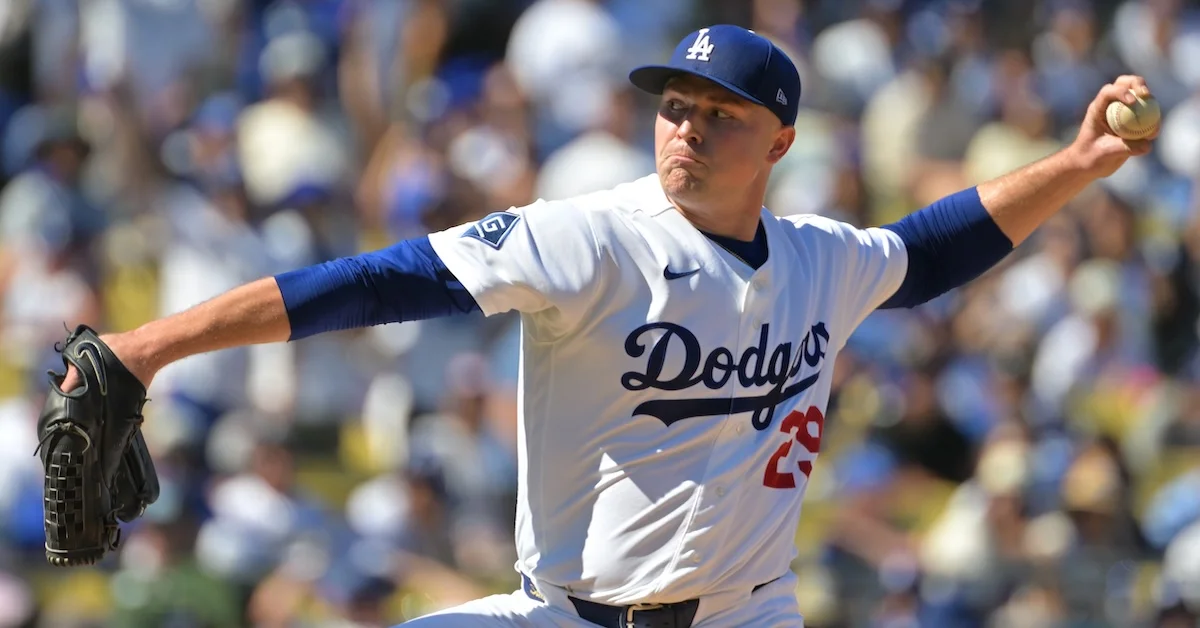
Skubal is the clear No. 1 free agent, and the best starting pitcher available by a wide margin. He looks set to establish a new record for a full-time pitcher, with one necessary caveat: Shohei Ohtani makes any claim about pitcher contracts complicated. Skubal returned quickly from an injury scare and finished with 26 starts and a 2.72 ERA; several ERA estimators rated him even better. He’s an ace who would lead almost any rotation in baseball.
The lack of comparable stars behind him should intensify the bidding. Teams looking for a true superstar have one obvious choice, and Skubal’s expected asking price sits beyond the range of past offers. That combination makes him the winter’s central prize.
The next tier has useful players, but no sure thing. Trevor Rogers, Michael King, and Freddy Peralta can anchor a rotation, but none is a capital-A Ace. Adrian Morejon has dominated as a reliever and may be able to start.
Among hitters, Seiya Suzuki and Randy Arozarena bring power from the corners, but both are over 30. Jazz Chisholm Jr. is younger, with more questions around his reliability. Japanese standout Teruaki Sato is younger still, but his power-first approach may not translate cleanly to MLB, and it’s not clear where he’d play in the field.
The top of the class is thin. The rest has plenty of practical options: 20 starters appear in my top 50, and many should be available on affordable one- or two-year deals. The list also includes a few established closers, multi-inning left-handed relievers, experienced catchers, three center fielders, and utility players with standout skills. That’s a familiar kind of depth from No. 31 onward; these players generally aren’t valuable enough to avoid free agency with major extensions.
There’s a reason teams may look harder at left-handed relief this winter. The Brewers won the World Series after turning to Aaron Ashby and DL Hall in multi-inning roles. Clubs hunting for depth around the edges should find options here. A team counting on this class to supply two stars and transform a middling roster probably won’t.
How I approached the rankings
There’s the usual uncertainty about which KBO and NPB players will come to MLB, and the looming lockout makes their decisions harder. I’ve included Sato, Kaima Taira, and Hiromi Itoh. Other players from those leagues would rank somewhere in the back half of the top 50 if I were sure they’d be available; I don’t expect them to be. For players in that tier, MLB’s salary may not be enough to outweigh their alternatives, especially when changing leagues means adapting during a likely shortened spring training. That assumes things go well.
I’m more optimistic than the consensus on several left-handed pitchers, especially those who miss bats. The best teams have stockpiled lefties over the past two years, and the reason is visible in the October matchups: some of baseball’s toughest lineups are packed with left-handed stars. The league is also getting more left-handed overall, as this look at the trend explains.
I also favor the youngest pitchers in the class. There aren’t many bankable aces beyond Skubal, so I’d rather bet on youth and upside than settle for a safer but limited outcome. Few of these arms seem like obvious choices to lead a playoff rotation; I’m interested in the ones with the tools to reach that level. For the lower spots, I gave extra weight to pitchers who finished the season well. The difference between, say, No. 46 and No. 56 often comes down to preference and tiebreakers. There are reasonable cases for several players who missed the cut; these are simply the 50 I like best.
I’m less convinced by the center fielders with unanswered questions: Daulton Varsho, Trent Grisham, and Luis Robert Jr. I have concerns about all three, and teams can often find competent outfield defense in their farm systems. I put more weight on offensive skills that are harder to replace internally, whether that’s the contact approach of Luis Arraez or the power of Jake Bauers. A team’s farm system should help shape its free-agent plan: the question is which gaps a veteran can fill better than a prospect.
That’s the broad view behind the list. If you’re wondering why a player sits lower than expected, why I favor one type of player over another, or why someone didn’t make the cut, the answer likely comes back to those market and roster questions. I’ll be taking questions about the rankings at 2 p.m. ET today. With that context in place, let’s get to the players.
| Type | Years | AAV | Total |
|---|---|---|---|
| Ben Clemens | 10 | $38.0 M | $380.0 M |
| Median Crowdsource | 8 | $42.0 M | $336.0 M |
| Avg Crowdsource | 7.91 | $42.4 M | $335.8 M |
| IP | BB% | K% | GB% | ERA | FIP | xFIP | WAR | RA9-WAR |
|---|---|---|---|---|---|---|---|---|
| 192.0 | 5.6% | 29.4% | 43.1% | 2.88 | 2.83 | 2.93 | 5.5 | 5.7 |
Ben’s Take
Predicting a contract for a pitcher as good as Skubal is relatively straightforward: teams aren’t shopping for a similar alternative. He’s so far ahead of the rest of this class that his market operates on its own. There are several pitchers who could turn in an ace-level season, but there’s only one ace available. The question is how far he’ll push past the previous pitching record.
Yoshinobu Yamamoto currently holds that mark with a 12-year, $325 million contract, which also included player benefits such as opt-outs and a no-trade clause. That’s a useful reference point, but I expect Skubal to prioritize money over convenience and set a new high for pitchers. Ten years is a long time to guarantee a pitcher, yet extra seasons spread the cost: my model puts a three-year Skubal deal at $65 million per year, a level that doesn’t fit typical baseball budgets. I expect him to sign before December, and I don’t think his contract will freeze the rest of the market the way some enormous deals have. There’s no one else like him this winter.
Player Notes
After Skubal won the Cy Young Award in both 2024 and 2025, Detroit offered him $19 million in arbitration before his walk year. He instead secured a record $32 million arbitration salary. The season still brought a setback: loose bodies in his left elbow forced surgery. He underwent an experimental NanoNeedle Scope 2.0 procedure and returned in about six weeks. By then, Detroit’s direction seemed clear: the Tigers traded him to the Dodgers for three players on August 2. Skubal kept pitching like an ace, but even he couldn’t deliver a third consecutive championship to Los Angeles.
Tarik Skubal’s underlying numbers still look elite, even if his surface results slipped from their 2025 peak. His 2.72 ERA was half a run higher than his American League-leading mark the year before, and he threw 158 2/3 innings—36 2/3 fewer than in 2025. But a 2.51 FIP, a 30% strikeout rate, and pitch models that put his stuff near its 2024 level suggest the dip isn’t a warning sign. He’ll probably set a salary record. I’d still bet against $400 million: lost time in his walk year and a compressed negotiating window before the expected lockout could limit the bidding, particularly for luxury-tax-sensitive clubs such as the Dodgers and Mets. He remains the clear top free agent and would lift any rotation.
Seiya Suzuki: the winter’s top bat
| Type | Years | AAV | Total |
|---|---|---|---|
| Ben Clemens | 4 | $27.0 M | $108.0 M |
| Median Crowdsource | 4 | $24.0 M | $96.0 M |
| Avg Crowdsource | 3.79 | $23.7 M | $89.8 M |
| PA | BB% | K% | AVG | OBP | SLG | wOBA | wRC+ | Off | Def | WAR |
|---|---|---|---|---|---|---|---|---|---|---|
| 644 | 11.5% | 24.7% | .256 | .346 | .447 | .346 | 120 | 13.6 | -9.3 | 2.7 |
Ben’s Take
Suzuki could receive about a quarter of Skubal’s guaranteed money, yet he arrives at the right moment: his career-best 4.5 WAR, 26 home runs, and Gold Glove finalist nod make him the winter’s most attractive hitter. If he can sustain above-average defense in a corner and stay healthy, he has several All-Star-caliber seasons in reach. His bat has been remarkably dependable across five big-league seasons; even his lowest wRC+ is 118.
Clubs have grown wary of long deals for hitters past 30, but Suzuki’s combination of patience, contact, and power gives him more room for an off year than most sluggers. The uncertain economics around the next labor agreement may cap his deal at four years. That could still leave him with the class’s second-highest annual salary.
Player Notes
The range of hitter options in this market is thin. There’s no longer a choice among players such as Aaron Judge, Trea Turner, and Willson Contreras. For a team seeking a reliable middle-order bat, Suzuki may be the only clear fit—and there are real costs to that certainty. He’s 32, a right-handed corner outfielder who already made 28 starts at DH in his walk year, a role that could grow. Since coming to the U.S. in 2022, he ranks 55th among qualified position players in WAR and 24th in wRC+.
His best season came in 2026. After a rookie campaign with 14 homers and a .336 OBP, Suzuki maintained his bat speed, made more contact in the zone, and pushed his walk rate above 10% as he settled in with Chicago. He also reversed four years of poor defensive metrics, grading well above average in right field and finishing at a career-high 4.5 WAR.
This market gives sellers unusual room to ask for more, so the winning club may pay a premium and feel the contract’s final years. Still, Suzuki is a complete hitter: he reaches base, drives the ball for average and power, and has kept his strikeouts and double plays manageable for a right-handed corner bat. He’s the best position player available.
Trevor Rogers: a left-handed starter with momentum
| Type | Years | AAV | Total |
|---|---|---|---|
| Ben Clemens | 4 | $26.0 M | $104.0 M |
| Median Crowdsource | 5 | $24.0 M | $120.0 M |
| Avg Crowdsource | 4.36 | $23.7 M | $103.3 M |
| IP | BB% | K% | GB% | ERA | FIP | xFIP | WAR | RA9-WAR |
|---|---|---|---|---|---|---|---|---|
| 175.0 | 7.0% | 22.4% | 40.7% | 3.82 | 3.83 | 3.91 | 3.2 | 3.1 |
Ben’s Take
Rogers looks unusual this high on a free-agent list, but the case holds up under scrutiny. By fWAR, he was the class’s second-best pitcher in 2026, and several advanced ERA measures tell the same story. He has above-average stuff and command, leans heavily on his four-seamer, and could appeal to teams that believe their pitch-design staff can find another gear. At 29 next season, he’s also one of the youngest starters available.
The risks are substantial: injuries have cost him roughly two seasons, and his 2024 start in Baltimore was poor enough to earn a demotion. His earlier command trouble looked more like a pitcher out of sync than a lack of tools, and he has since corrected it. His left-handedness adds value, too. Clubs seeking matchup options against elite lineups such as the Yankees, Dodgers, and Brewers may prefer a lefty when choosing between comparable starters.
Player Notes
Baltimore acquired Rogers from Miami at the 2024 deadline, hoping he could recover his 2021 form and help the playoff push. The second part never happened: he made four bad starts and was sent down. The first part took longer, but the Orioles’ read proved right.
That winter, Rogers went to Driveline, rebuilt strength lost after a back injury, adjusted his delivery, and changed his sweeper grip. A dislocated knee delayed his 2025 debut; once back, he dominated. His fastball gained more than a tick of velocity, while better physical stability helped him locate it and get ahead in counts. The sweeper quickly became a standout pitch.
Across the past two years, Rogers has a 3.20 FIP and 7.3 WAR in 48 starts, ranking 17th among starters in both measures. He threw a career-high 169 2/3 innings this season and has established himself as a dependable starter: a high-end No. 3 for cautious evaluators, a No. 2 for others. Even with several strong left-handers on the market, a nine-figure deal is plausible.
Michael King: strong value, with some warning signs
| Type | Years | AAV | Total |
|---|---|---|---|
| Ben Clemens | 4 | $25.0 M | $100.0 M |
| Median Crowdsource | 4 | $25.0 M | $100.0 M |
| Avg Crowdsource | 3.98 | $25.6 M | $102.0 M |
| IP | BB% | K% | GB% | ERA | FIP | xFIP | WAR | RA9-WAR |
|---|---|---|---|---|---|---|---|---|
| 180.0 | 8.5% | 22.1% | 42.4% | 4.07 | 4.11 | 4.09 | 2.5 | 2.5 |
Ben’s Take
King may yet return to San Diego on a reworked version of his previous deal, but as a free agent he’s among the more appealing starters available. He opted out with two years and $53 million left after a 2026 season in which he set career highs in starts and innings and produced 2.6 WAR. He wasn’t as dominant as in 2024, but this was a strong recovery after he missed half of 2025.
The concern is that several underlying indicators moved the wrong way: King posted career lows in swinging-strike and strikeout rates, and career highs in walk rate, xFIP, xERA, and SIERA. A low BABIP and high strand rate helped his results, and those may not repeat. The projections point toward a good mid-rotation starter rather than an ace. I’d pay a little extra for his reliability and flexibility; San Diego, under A.J. Preller, has also shown a willingness to spend to keep its own players.
Player Notes
A 12th-round pick who first found his place in the Yankees’ bullpen, King became one of the more successful reliever-to-starter conversions in recent baseball. Shoulder nerve trouble and knee pain limited him in 2025, but he gave San Diego three good seasons: 7.5 WAR, a 3.15 ERA, and a 3.86 FIP over 432 innings, plus six strong postseason appearances. He was healthy in 2026. Skubal stands above the field, but King belongs in the conversation with Rogers and Freddy Peralta for the class’s next-best arm.
His strikeouts have fallen, though opposing contact hasn’t risen by as much, leaving some reason to think the swing-and-miss is still there. King works with sinkers, four-seamers, and sweepers to right-handed hitters, mixing in changeups against lefties and sliders against righties. Teams that aren’t pursuing Skubal have plenty of reason to call.
Teruaki Sato: power with a wide range of outcomes
| Type | Years | AAV | Total |
|---|---|---|---|
| Ben Clemens | 5 | $22.0 M | $110.0 M |
| Median Crowdsource | 5 | $20.0 M | $100.0 M |
| Avg Crowdsource | 4.52 | $19.6 M | $88.6 M |
| PA | BB% | K% | AVG | OBP | SLG | wOBA | wRC+ | HR | WAR |
|---|---|---|---|---|---|---|---|---|---|
| 607 | 9.2% | 32.1% | .254 | .326 | .471 | .339 | 118 | 25 | 2.9 |
Ben’s Take
Sato resembles Munetaka Murakami: an NPB corner infielder with huge power and a swing built to lift the ball, plus the strikeout risk that comes with it. His miss rate in Japan matched Colson Montgomery’s in MLB; Montgomery set the single-season strikeout record. Sato may not whiff at that rate in the majors, but the uncertainty is real. He could become another Murakami—or the downside could be substantial.
His defense grades below average at both third and right field. Some clubs may view him as a first baseman; others could rotate him among the corner positions and accept the defensive cost for his power. That makes him a risky bet for a playoff contender that needs an immediate difference-maker. The upside is just as clear: if he can handle third and his power translates, he has perennial All-Star potential. A rising club willing to gamble on that ceiling could follow the White Sox’s approach with Murakami last year. Sato is young enough that a successful first season could pay dividends for years.
Player Notes
Four teams named Sato as their first-round choice in the 2020 NPB draft, an unusually high number; Hanshin won the lottery for his rights. The college draftee reached the big club in 2021 and struck out 38% of the time as a rookie. He then put together three steadier seasons before a major power surge in 2025. Over the past two years, he has averaged 40 homers and 80 extra-base hits. He won the Central League MVP in 2025 and, after claiming the league’s Triple Crown, is the presumed favorite to repeat in 2026.
Sato’s power is most striking on low pitches. Sometimes he turns with his whole body and finishes with a flourish; at other times, his hands do the work. He does most of his damage by pulling middle-to-low pitches, especially softer offerings that don’t drop below the zone. His 2026 metrics back up the scouting view: a 56% hard-hit rate, 108 mph EV90, and 116 mph maximum exit velocity all rate as plus. The raw power projects to 30 home runs in MLB.


