A contract dispute becomes a test of Tampa Bay’s priorities
Nikita Kucherov’s reported trade request puts Tampa Bay Lightning general manager Julien BriseBois in a difficult spot: find a deal that recognizes one of the NHL’s most productive stars, or consider what the team could get in return. The dispute appears to involve more than salary. Kucherov says communication and respect broke down as negotiations stalled.
Elliotte Friedman reported in his Saturday Headlines that Kucherov wanted an annual value in the range of Kirill Kaprizov’s contract. At the time, Kaprizov held the league’s highest annual salary, at $17 million.
Kucherov is in the final season of an eight-year, $76 million contract with a $9.5 million annual value. AFP Analytics projects his next deal at three years and $12 million per season. Kevin Weekes reported that BriseBois initially offered $13 million annually. Tampa later raised its offer to $15 million after the market shifted: Philadelphia signed Leo Carlsson to a five-year, $90 million offer sheet worth $18 million per year, while Cale Makar reached a $20.4 million annual value.
Speaking to the media, Kucherov described the breakdown in direct terms:
“It was never about the money for me, more about the poor communication and respect. In the last four months, we only have had two conversations. Julien, in the end, made it clear: I’m free to walk on July 1st.”
That account makes the gap in the talks sound personal as well as financial. Kucherov has spent his entire NHL career in Tampa, where he’s become the franchise’s all-time points leader, passing Steven Stamkos. He’s also a two-time Stanley Cup champion, two-time Hart Trophy winner, seven-time All-Star, three-time Art Ross Trophy winner and two-time Ted Lindsay Award winner. He’s exceeded 100 points in a season repeatedly.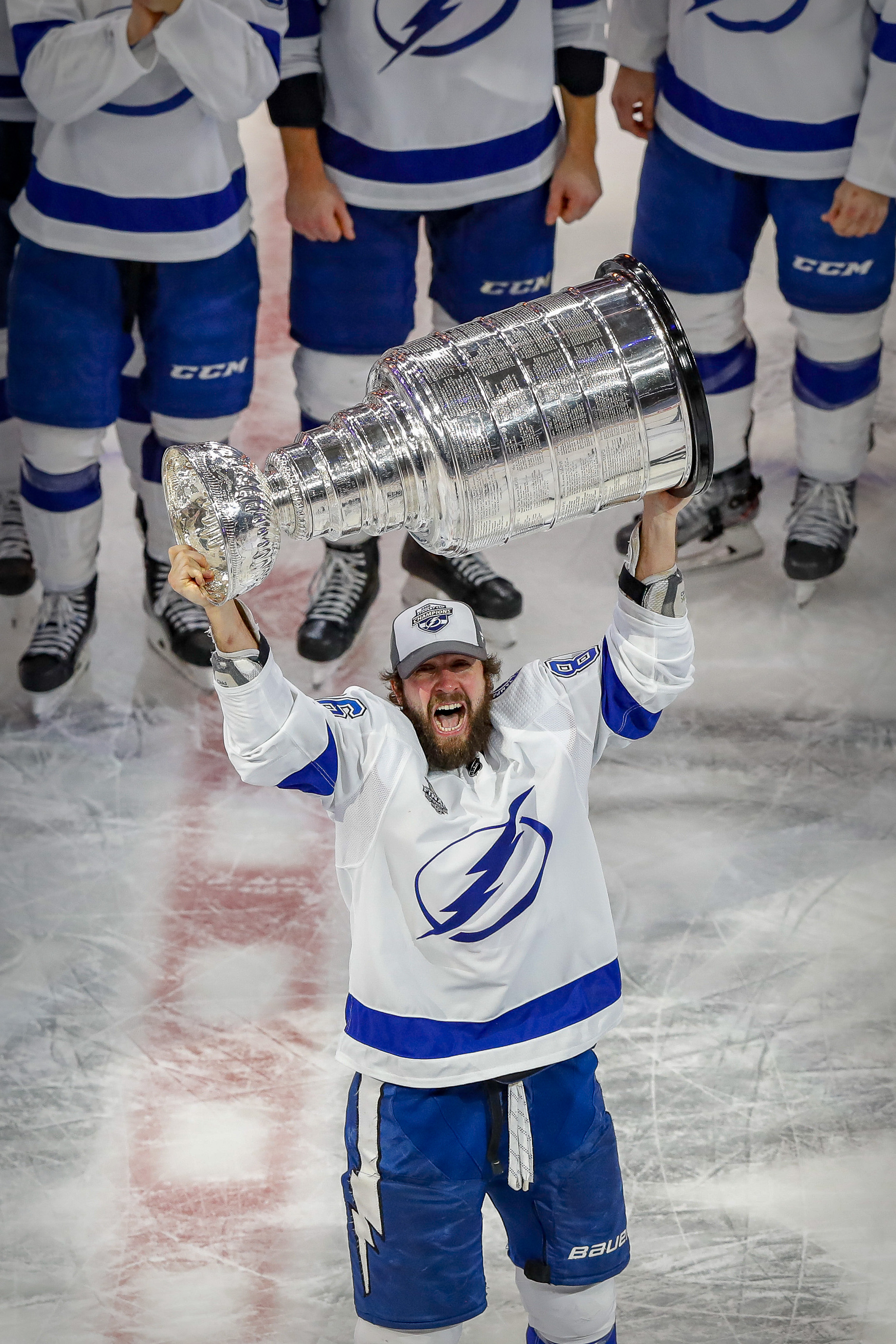
Age, cap share and a changing market
The reported offers suggest Tampa is weighing Kucherov’s age—he’s 33—and the possibility that his production could decline. A $13 million salary would be close to the share of the cap his current contract carried when it began in 2019-20: 11.6%, compared with roughly 9% now. At $15 million, his cap share would be 13.2%; at $20 million, it would reach 17.6% of Tampa’s payroll.
The new contracts for younger stars help explain why Kucherov may see room for a much larger number. Macklin Celebrini, Connor Bedard and Cutter Gauthier have earned major deals on the strength of potential shown early in their NHL careers. Kucherov’s case rests on an established record of elite production and individual awards.
Tampa has previously made difficult decisions involving franchise stars. In 2008, the team traded Brad Richards amid salary pressure after signing Vincent Lecavalier to an 11-year contract, which the club bought out in 2013. Martin St. Louis requested a trade months later and was dealt to the New York Rangers. More recently, after Tampa made a low offer to Stamkos, he signed with the Nashville Predators as an unrestricted free agent.
Trade options come with their own cost
The Lightning have said they aren’t willing to trade Kucherov. Still, their cap position could make a new deal possible: Tampa has $29.8 million in projected space for 2027-28. Committing a large share of it to one player, though, would leave less room to fill out the roster around its veteran core. That trade-off matters for a team that has relied on Kucherov’s 110-plus-point seasons in each of the last four years.
Few clubs have the room to meet a potential $20 million annual demand. For 2027-28, the Devils, Ducks, Golden Knights, Avalanche, Capitals, Panthers and Maple Leafs each have less than that amount in projected cap space. Kucherov’s 10-team no-trade list gives him a say in any move. Friedman said Toronto and Montreal are among the teams he might consider, but their finances differ sharply: Toronto has $2.4 million in projected space, while Montreal has $29.7 million.
If Tampa holds to its current position, a trade would require a return that helps the Lightning stay competitive, perhaps including a top-line player and future assets. That kind of package may be difficult for another contender to surrender. The team’s choice now turns on what it values more: keeping a proven offensive force, or using a trade to reshape the roster while Kucherov’s market remains strong.