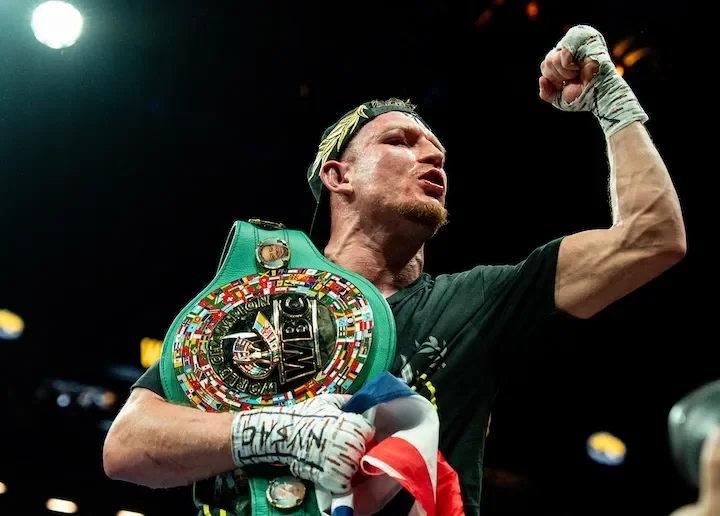
Dalton Smith’s first defense of the WBC junior welterweight title brings two tests into focus: the challenge posed by Alberto Puello, and the champion’s objections to how boxing handles failed drug tests. Smith meets Puello in Sheffield on Saturday, only months after beating Subriel Matias to win the belt. The bout gives the new champion a chance to establish himself in the division, but the circumstances also put questions about enforcement squarely in the build-up.
A title won against the odds
Smith stopped Matias in the fifth round at Brooklyn’s Barclays Center, despite entering the fight as the underdog. The result was a major moment for Smith and his family, but it came with an uncomfortable complication: Matias had tested positive for ostarine, and the WBC allowed the bout to proceed. That decision is part of the context for Smith’s comments now, even as he says he has moved on from the win itself.
“That's in the past for me now,” Smith told BoxingScene. “I want to keep replicating that.” The distinction is telling. A championship win can define a fighter’s public profile, while the next defense quickly puts that achievement under pressure. Smith’s focus on repeating the performance suggests he sees the title as something to defend through results, rather than as a reason to dwell on the circumstances of his first win.
Puello, too, has a failed test in his record. He tested positive for clomiphene before a scheduled title defense against Rolando Romero in April 2023 and received a six-month suspension. That history makes the upcoming contest an unusually direct setting for Smith’s criticism: both men enter with a connection to failed tests, though the cases described here involved different substances and outcomes.
Smith says he opposes performance-enhancing drugs and wants stronger penalties for violations. “People are failing left, right and centre,” he said. “I just think the punishment needs to be a little bit harsher. If anything, they need lifetime bans, don't they? But it's out of my hands.” His proposed penalty is severe, but he also acknowledges that deciding consequences belongs to others. That gap between a fighter’s view and the authority to set sanctions is central to the complaint.
What a failed test means for a title fight
Drug testing and punishment can shape how a bout is understood well beyond fight night. When a positive result appears in the lead-up to a contest, the response can affect whether the event proceeds and how fans assess the performances afterward. In this case, the WBC allowed Smith’s fight with Matias to go ahead; Puello’s positive test, by contrast, was followed by a six-month suspension before his scheduled defense against Romero.
Those different circumstances don’t establish what the right penalty should be. They do help explain why Smith is pressing for clearer, tougher consequences. A suspension sets a defined period away from competition, while a lifetime ban would end a fighter’s eligibility permanently. Smith’s comments show how far apart those approaches can be, even when the underlying concern is the same: whether the penalty is strong enough to deter violations and preserve confidence in the contest.
Here's the thing: broad demands for harsher punishment can sound straightforward until they have to be applied to individual cases. The source offers no details about the testing process or the reasoning behind either case’s handling, so it can’t settle those questions. Still, a champion speaking openly about the issue matters. This is more significant than it looks because Smith’s title story and his criticism of enforcement now share the same public stage.
Smith says he won't avoid the mandatory challenger
Puello presents a demanding first defense for a champion who has held the title for only a short time. Smith says he never considered giving up the belt to avoid a difficult mandatory challenger. His argument is simple: a champion should face the best available opponents, even when the matchup carries real risk to the reign.
“I've never avoided a fighter to this day, so why am I going to do it now?” Smith said. He added that he has won fights after being written off and intends to keep doing so. The remark connects his past experience as an underdog with the task ahead, though it doesn’t make Saturday’s outcome any less uncertain. Reputation and confidence can shape the story around a fight; the result still has to be earned in the ring.
That stance also gives the defense a purpose beyond keeping the belt. A mandatory challenger is a required opponent, and refusing to meet one can raise questions about a champion’s willingness to face the strongest available competition. Smith says he won’t take that route. If you're working in this space, the point to watch is how he balances that public commitment with the practical demands of defending a newly won title.
Hillsborough remains a future ambition
Smith and promoter Eddie Hearn have discussed staging a fight at Hillsborough Stadium, the home of Sheffield Wednesday, the club Smith supports. A recent face-off with Puello took place on the pitch during a match attended by around 35,000 fans, giving Smith a glimpse of the setting he hopes to experience in a future bout. The event connected his boxing ambitions to a familiar local venue, while also letting supporters see the matchup in a different setting.
A pitch-side face-off is a taste of the atmosphere, not a guarantee that a stadium fight will happen. Such an event would depend on more than a fighter’s enthusiasm, and the source gives no timetable or confirmed plan. For now, the immediate measure is the defense against Puello. Smith said, “Saturday night, I come out victorious, I believe that's what will happen next,” referring to the possibility of a stadium fight. His prediction for the contest was more concise: “And still.”
That said, the two ambitions feed into each other. Winning would keep Smith’s title reign alive and make the Hillsborough idea easier to discuss; losing would change the conversation. The upcoming fight therefore carries a near-term sporting stake and a longer-term personal hope, without making either outcome a foregone conclusion.
The implications for Smith’s reign
Saturday’s bout will test whether Smith can turn the momentum of his win over Matias into a sustained title run. It will also keep attention on a tension he has raised himself: fighters may call for tougher enforcement, but they don’t control how governing bodies handle cases. That distinction matters as the sport weighs the credibility of its contests against the demands of competition.
Smith has set out his position plainly, accepted the mandatory challenge, and named a hometown stadium as a future goal. The rest is still to be decided. A successful defense would answer the immediate sporting question; it wouldn’t, by itself, resolve the wider debate over failed tests and penalties. And that’s the part most people overlook: a compelling fight can hold attention, but the rules around it shape how much trust the result earns.


