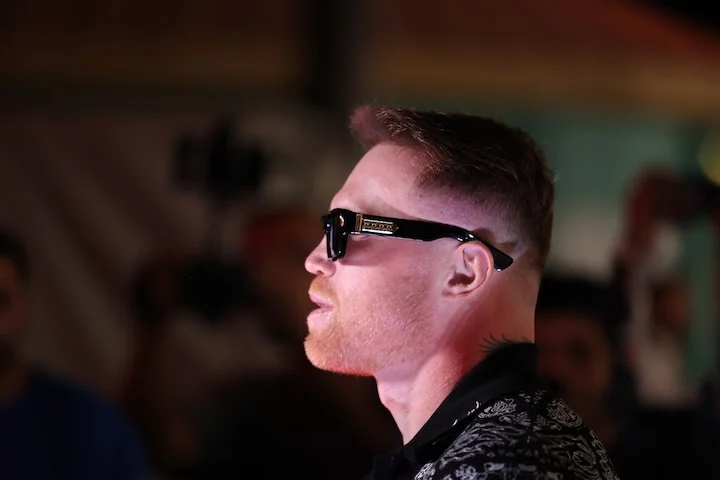
A fight week with real stakes
Halloween fight-night jokes write themselves. This week, they feel grotesque. Saul “Canelo” Alvarez is scheduled to headline a card against Christian Mbilli in Riyadh, Saudi Arabia, while the region is an active war zone. The usual boxing talk of “bombs” and “detonating” punches lands differently when people are worried about actual strikes.
Boxing always carries danger, as do ordinary acts like driving or walking through a rough neighborhood. But those risks are usually remote. The concern around Saturday’s card is measured in whole numbers, not fractions.
That concern has already changed the region’s sporting calendar. A tennis tournament was shifted to late December; a golf event was postponed indefinitely; cycling was canceled; an eSports competition was bumped; and numerous soccer matches are being rescheduled. Yet five days before the opening bell, Canelo–Mbilli is still set to go ahead.
The most alarming detail is the October 10 missile strike on King Khalid International Airport, which killed 13 people and injured 308. In that context, proceeding with a boxing card seems reckless. Why wasn’t an alternate venue considered? Is this date and arena worth asking undercard fighters, trainers, managers, promoters and broadcasters to travel through danger or sit the event out? Some boxers may not be able to make the trip; others may arrive worn down by a journey involving planes, trains and automobiles.
There’s no sporting necessity that requires this card to happen as planned. But the decision fits a familiar pattern: Canelo has a long record of choosing his own course and sticking to it, even when people around him counsel against it.
Canelo’s history of digging in
Rafe Bartholomew gave the name “Heel Canelo” to the idea about a decade ago. The stubborn streak goes back further. In April 2013, while with Golden Boy Promotions, Alvarez insisted on fighting Austin Trout, an undefeated southpaw who had just scored a convincing upset over Miguel Cotto.
Oscar De La Hoya said Golden Boy CEO Richard Schaefer, matchmakers Robert Diaz and Eric Gomez, manager Jose “Chepo” Reynoso, and trainer Eddy Reynoso all opposed the matchup. Trout said De La Hoya and Schaefer tried repeatedly to stop it, and that when the bout moved from Las Vegas to San Antonio, Alfredo Angulo was floated as an alternative. Canelo, Trout said, put his foot down: “No, I want Trout.” Alvarez’s own explanation was simple: “It was brought up that there are other fights and let’s take other avenues, but I wanted this fight, and that’s why we’re here.” He won a close decision—closer in the ring than the official cards suggested—and moved on.
Five months later, at not quite 23, Alvarez chose Floyd Mayweather. The money was enormous: his purse was about $12 million, roughly five times his previous career high. He could likely have waited a year or two for better odds of beating Mayweather, but insisted he was ready. He also kept trying to outbox Mayweather after that approach was clearly failing, rather than switching to a more aggressive plan. Mayweather took Alvarez’s unbeaten record.
The pattern repeated ten months after that against Erislandy Lara, an elusive southpaw who had accused Canelo of avoiding him. De La Hoya reportedly tried to steer Alvarez away; Alvarez took the fight, and two of the three judges awarded him a split decision. In 2016, after beating Cotto for the lineal middleweight title at a 155-pound catchweight, Alvarez said he’d face Gennady Golovkin only if “GGG” accepted the same limit. That condition delayed the fight until 2017, when Golovkin was past his physical peak.
Sometimes that resolve has meant carrying on through a personal crisis. In December 2018, less than a week before Alvarez was due to fight Rocky Fielding, one of his brothers was kidnapped. Canelo reportedly spent three days negotiating his brother’s safe release and refused to postpone the bout. Fielding was a comparatively soft opponent: he went down four times in a fight that lasted less than three rounds. The episode offers a precedent for Canelo continuing amid serious distractions, though the circumstances in Riyadh raise a different kind of risk.
Then there’s David Benavidez. Alvarez was the lineal super middleweight champion in 2024, with Benavidez the obvious leading contender. Alvarez said he’d take the fight for $150 million to $200 million, then later emphasized the $200 million figure without mentioning the lower option. Fans accused him of avoiding Benavidez. He didn’t change course.
Money, control and responsibility
Most fighters can’t dictate their opponents and terms. Alvarez can, and that power helps explain his stubbornness. He’s repeatedly shown that criticism, advice and even an obvious alternative won’t necessarily change his mind.
That same posture now hangs over Riyadh. Other sports are pulling back; some fighters without access to private jets are reportedly flying into Bahrain, then driving about 300 miles through areas that may be targeted by drone strikes. Canelo’s implied answer, as the star around whom the event is built, seems to be: I’m Canelo Alvarez.
He is reportedly due $47 million to fight Mbilli, and would still collect that purse if organizers canceled the card; he would forfeit it if he withdrew. CelebrityNetWorth.com estimates his fortune at $350 million. He doesn’t need this week’s paycheck to be financially secure, but wanting to collect it is understandable.
Choosing to proceed is harder to defend when the potential cost falls on other people too. The question isn’t only whether Canelo is willing to take the risk. It’s whether the money and the fight justify asking everyone around the card to take it with him.
The real risk in holding this fight in Riyadh isn’t that disaster is likely. It’s that a low-probability catastrophe can be waved away because most people expect everything to go fine. That’s the same faulty logic behind driving after a few drinks: getting home safely doesn’t make the decision sound.
DAZN’s broadcast crew is expected to call the show remotely, which should keep them safe. The fighters have no such option. Some undercard boxers may skip the trip; those who go could face a fight week and fight night atmosphere as strange and tense as the Covid-era bouts in empty arenas. A military strike, though, is a far more frightening prospect than those deserted venues.
Most likely, everyone will leave Riyadh unharmed, and the boxing world won’t hold Canelo Alvarez or Turki Alalshikh responsible for proceeding. But the other possibility is horrifying. That imbalance deserves more weight than the easy assumption that things will probably work out.
The fight that could have been the story
On paper, an aging Alvarez against a peak-form Mbilli is a compelling matchup. If the organizers had moved the event a couple of weeks ago to an available arena in a country not under active bombardment, that contest might be the focus now. The move could have frustrated powerful backers seeking the fullest return on their investment. Instead, the setting threatens to overwhelm the sporting story.
As BoxingScene’s Lance Pugmire reported last week, Alvarez told people close to him, “I am willing to go to hell to get my belt back.” That’s Canelo: stubborn in spirit, and famously willing to take punches. Presumably, he meant hell figuratively. Let’s hope that’s all the line means a week from now.


