Austin Wells’ finish to the 2026 season gives the Yankees a reason to keep their catcher plans modest. But his sharp first-half decline, followed by a rebound after a stint on the injured list, leaves New York with a consequential offseason choice: trust Wells and add a defensive backup, or pursue a more substantial upgrade. The decision turns on how much confidence the club places in a two-month offensive surge, and how it weighs that production against the physical demands of catching. Those questions matter because either approach would shape how much playing time Wells gets and how much of the club’s resources go toward the position.
One season, two very different stretches
Wells had a .504 OPS at the All-Star break, then hit .229/.343/.441 with seven home runs over the final two months. He carried that momentum into the playoffs, going 5-for-15 with four RBI. The postseason sample is small, but it adds another positive stretch to a season already divided into starkly different halves. His eighth-inning attempt to turn a double into a triple in Game 1 of the ALDS drew attention, though the more consequential moment for his night had come earlier: his hit broke up Drew Rasmussen’s no-hitter during a dominant outing for the pitcher. A single play can become the headline; the broader question is whether Wells’ late production reflects a meaningful change in his hitting.
The turnaround followed a two-week injured-list stay in June for cervical headaches. Wells had taken several foul tips off his mask earlier in the season and passed concussion tests at the time. Two incidents stood out: one against Boston on April 23, another in Milwaukee on May 9. He was hitting .175 through 20 games before the Boston game, though two of his four pre-injury home runs came in the stretch between the foul tips. That uneven timeline makes it difficult to isolate how much the headaches affected his offense. It also complicates any simple explanation of the slump: the timing raises a health question, but the available facts don’t establish that the foul tips or headaches caused the decline.
“I think you look at the sample of two months there and say, ‘That wasn’t me. That wasn’t who I am,’” Wells told Brendan Kuty of The Athletic. His assessment is a clear statement of confidence, but it doesn’t settle the roster question. A strong finish can help establish a player’s case; it can’t erase the long stretch that came before it. The Yankees have to decide how much weight to give each part of the season.
[Related: New York Yankees Offseason Outlook]
The defense stayed steady
Wells’ value behind the plate held up through both stretches. Before his IL stint, he produced 3 Fielding Run Value across 401 innings and ranked fifth in Statcast’s catcher framing metric. After returning, he recorded 7 Fielding Run Value in 559 innings and again finished fifth in framing. That consistency gives the Yankees a firmer basis for evaluating his defensive contribution than his split offensive record provides for his bat. It also means the choice isn’t simply whether Wells can help the team; it’s how much additional offense the club would need from the position to justify changing the arrangement.
He switched to a hockey-style catcher’s mask after returning and told Kuty he was “definitely going to be more careful and paying closer attention” to his health. He finished the season without another reported setback. Still, catching puts repeated physical demands on a player, and one healthy finish can’t answer every question about the next season. The equipment change and Wells’ stated caution show that the issue was taken seriously, while the lack of a further reported setback is reassuring. Neither fact, on its own, removes health from the offseason calculation.
Backup or bigger upgrade?
If New York reads the second half as a fairer picture of Wells, it can prioritize a lower-cost backup. Austin Hedges, if the Yankees can pry him from Cleveland, and former Yankee Kyle Higashioka offer defense-first possibilities. The club could also stay in-house: J.C. Escarra and Ali Sanchez have shown plus defense in limited major-league action. Each route would leave Wells as the primary catcher, while asking a backup to cover enough starts to give him support over the season. That’s a practical plan if the Yankees believe his late offense is a reasonable expectation and want the backup role to emphasize defense.
The tradeoff is that a defense-first reserve won’t resolve the uncertainty about Wells’ bat. If he returns to the early-season level, the position could again be a weak point in the lineup; if he sustains something closer to his second-half production, a more expensive acquisition might leave New York paying for offense it doesn’t need. The numbers here don’t point cleanly in either direction. They make the roster decision more sensitive to the Yankees’ view of Wells’ underlying ability and the amount of risk they’re willing to carry at catcher.
The case for spending more depends on how much doubt remains about Wells’ bat. Ryan Jeffers, Tyler Stephenson and Carson Kelly sit among the free-agent options New York considered at some point during the season, with the Yankees also having shown interest in trades for Jeffers and Stephenson. A more aggressive trade could target Hunter Goodman or Shea Langeliers. Those names describe several possible routes, but they don’t tell us what a deal would cost or whether any particular player would be available. The meaningful distinction is the scale of the move: a backup would preserve Wells’ central role, while a bigger acquisition could challenge that role or reduce his workload.
What the decision signals
New York’s catcher market therefore hinges less on finding names than on deciding what Wells’ split season means. If the late surge is the better guide, a capable backup may be enough. If the early struggles carry more weight, the available trade and free-agent paths give the Yankees room to make a larger move. This is more significant than it looks: the club is choosing how much uncertainty it can tolerate at a demanding position, not simply filling a vacancy.
Here’s the thing: the defensive record gives Wells a solid foundation, but the offense remains the swing factor. And yet, the season doesn’t offer a clean answer about why his production changed. (And this is the part most people overlook.) The health question and the performance question are related, but they’re not interchangeable. If you’re working in this space, the useful takeaway is that the Yankees can justify either path only by making a clear judgment about the weight of the evidence. A modest backup plan would signal trust in Wells’ rebound; a larger move would signal that the club wants protection against another early-season slump. Either way, the decision will reveal how the Yankees see the catcher they already have. A difficult read.
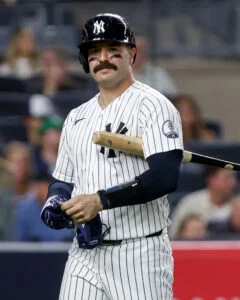
Photos courtesy of Vincent Carchietta and Tom Horak, Imagn Images


