Belgium’s surf culture runs on a demanding calculation: catch the brief window after a storm, or accept that the session may be over before it begins. The country has only 65 kilometres of North Sea coastline, and its waves are mostly wind swell. For surfers here, patience and timing matter as much as the forecast—and sometimes the forecast is barely helpful.
Keith Marcantuoni grew up surfing in Blankenberge, on Belgium’s coast. He says surfers can’t wait for the sea to look inviting before heading out. “I always say to people here, if you’ve seen a glassy wave on the beach, you’re too late,” he said. Strong winds and storms get the water moving; once the wind eases, the waves may clean up for only a few hours.
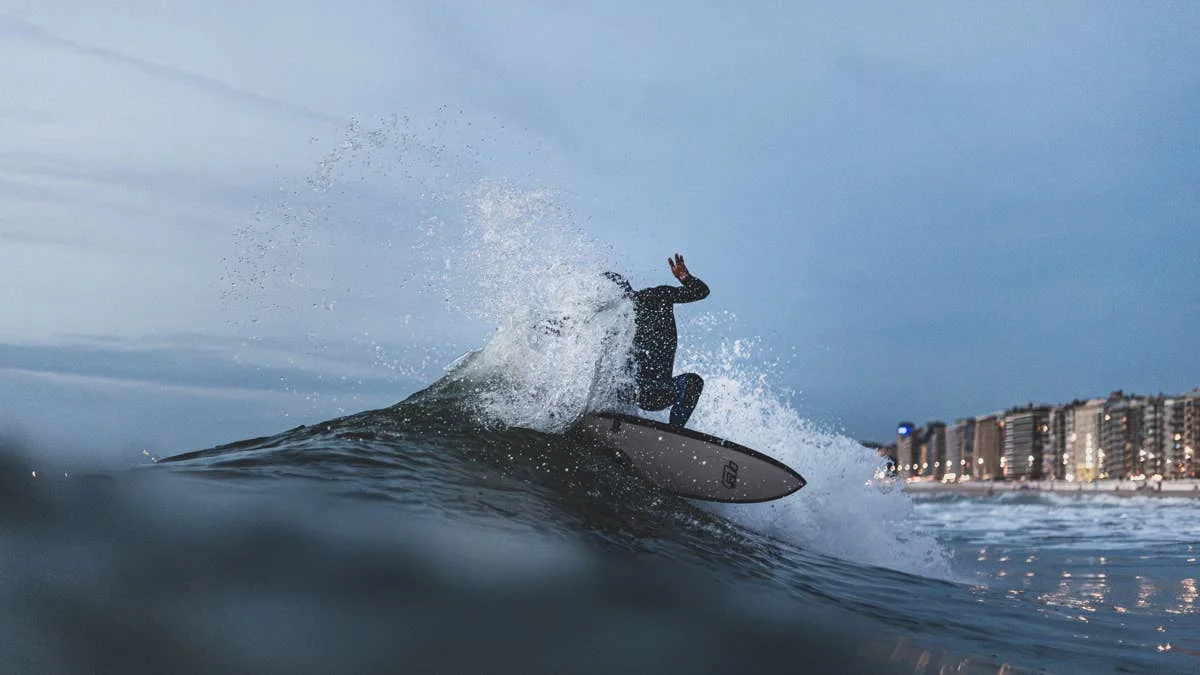
That timing helps explain the scene’s reputation for commitment. Winter water temperatures average 39 to 46 degrees Fahrenheit, and the wind can blow onshore, cross-shore or offshore. Some surfers based in Antwerp take a two-hour train ride to the beach, change on the shoreline, and paddle out for an hour in uncertain conditions before making the trip home.
Reading the moment after the storm
For Marcantuoni, surfing Belgium means learning to work with conditions that many visiting surfers might dismiss. A west or northwest wind can exceed 100 kilometres per hour, producing disorganized waves and heavy whitewater. The challenge is to find a rideable face inside the mess.
“When the wind blows through, it’s then a glass off for a few hours,” he said. “So if you miss it right as it’s doing that, you’ve pretty much missed the session.” Here, a forecast is a prompt to pay attention, not a promise of clean surf.
Marcantuoni has since moved to Bali and works as a surf coach, including with surfers from Belgium and the Netherlands. He believes growing up with weak, inconsistent waves teaches surfers to spot possibilities in conditions they might otherwise overlook. “Every wave has a clean face,” he said. “You just have to find it. If you grew up in a place like Belgium, you see the clean face in every wave.”
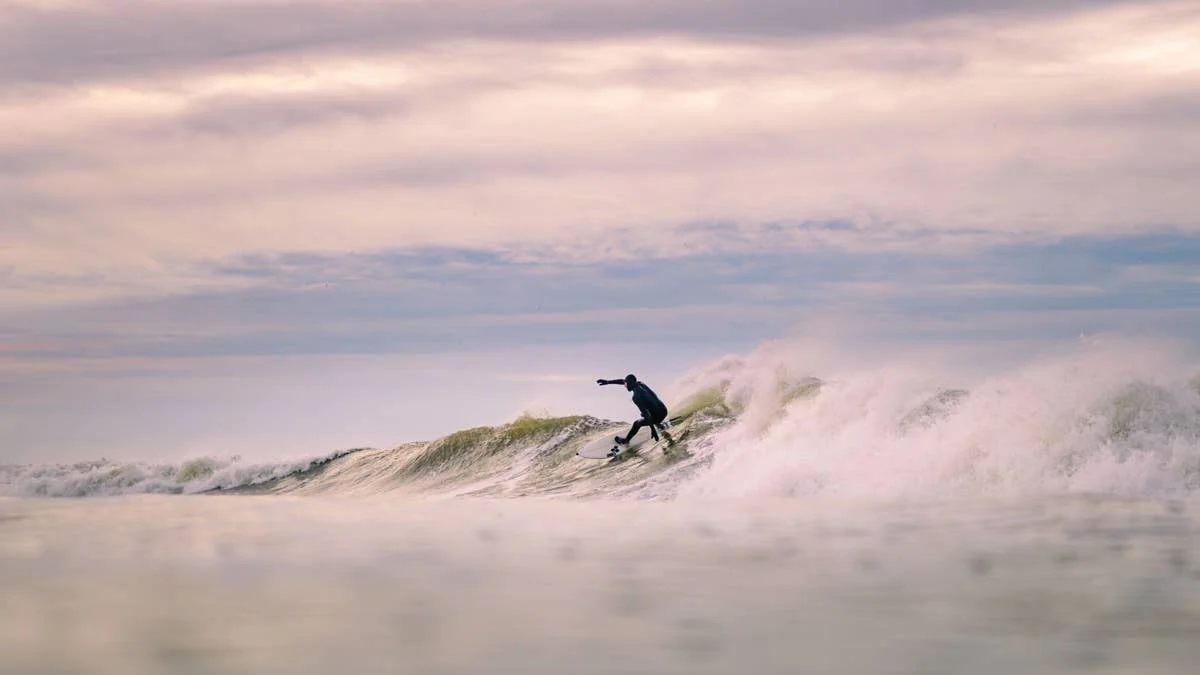
Matthias Vanoverbeke, right out front. Photo: Maarten Van De Velde.
Related: Unlikely October Surf Spots That You’ve (Probably) Never Seen Before
A surf club in a wartime bunker
Marcantuoni’s connection to the coast began well before he could surf. His family had owned a traditional beach cabin for generations, positioned beside the Belgian pier. Next door, the Offshore Surf Club offered local surfers a place to gather—inside a World War II bunker.
The club was rough even by North Sea standards. Marcantuoni remembers no electricity, water leaking through the structure and mould on the walls. Big swells and spring tides could send seawater into the bunker, sometimes forcing members to evacuate. The setting made for a childhood introduction to a surf community shaped by exposure to the elements and a willingness to show up anyway.
His parents ran Breeze Board Shop, which initially focused on surf clothing. Their sons’ interest helped shift the business toward surfboards, and it grew into one of Belgium’s major surf shops. Marcantuoni started surfing at about eight, after his parents gave him and his brother a board. “I just went into the North Sea, and immediately got hooked,” he said.
He spent summer holidays in the water, learning through repetition. Within a year or two, O’Neill had taken an interest and offered sponsorship. That support helped him travel for surf coaching trips to South Africa, Mexico, France, Spain, Ireland and Iceland. He competed nationally and internationally, becoming Benelux champion at 18.
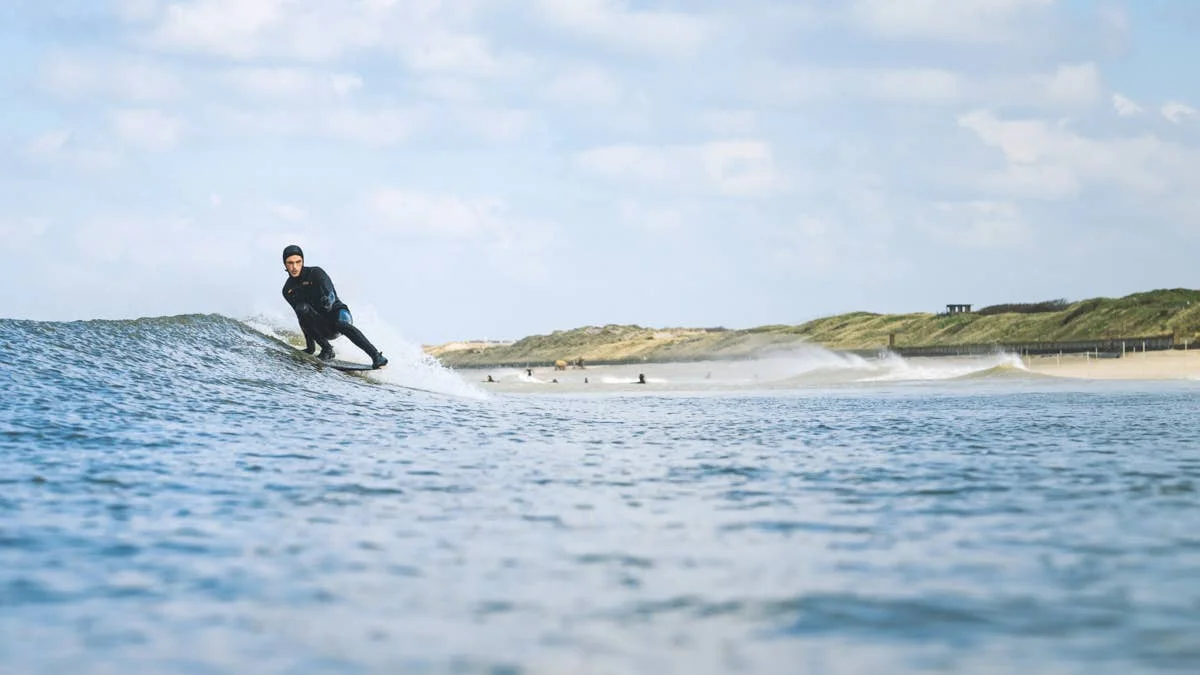
Sascha Borrey, making the most of it when it’s a foot and offshore. Photo: Maarten Van De Welde.
A small coastline, a close community
Those travels broadened his experience, but home remained central to how he surfed. “I could literally hear the waves when I was in my parents’ garden,” he said. “We just grabbed the bike, put the surfboard underneath our arms and went to the beach.” With the shoreline close by, local surfers could respond quickly when conditions shifted.
Belgium’s short coast offers little room to escape a change in wind or swell. Groundswells sometimes wrap around England, but most sessions depend on local wind swell, and the opportunity can disappear quickly. Marcantuoni sees that constraint as the defining feature of surfing there: the reward is not only a clean wave, but the effort it takes to get in the water at all.
“Belgian surfers deserve a lot of respect because, in my opinion, they’re some of the most hardcore surfers in the world,” he said. His point isn’t that every session produces good surf. It’s that local surfers learn to make a session out of whatever the North Sea offers, from small offshore waves to turbulent water that demands careful navigation.
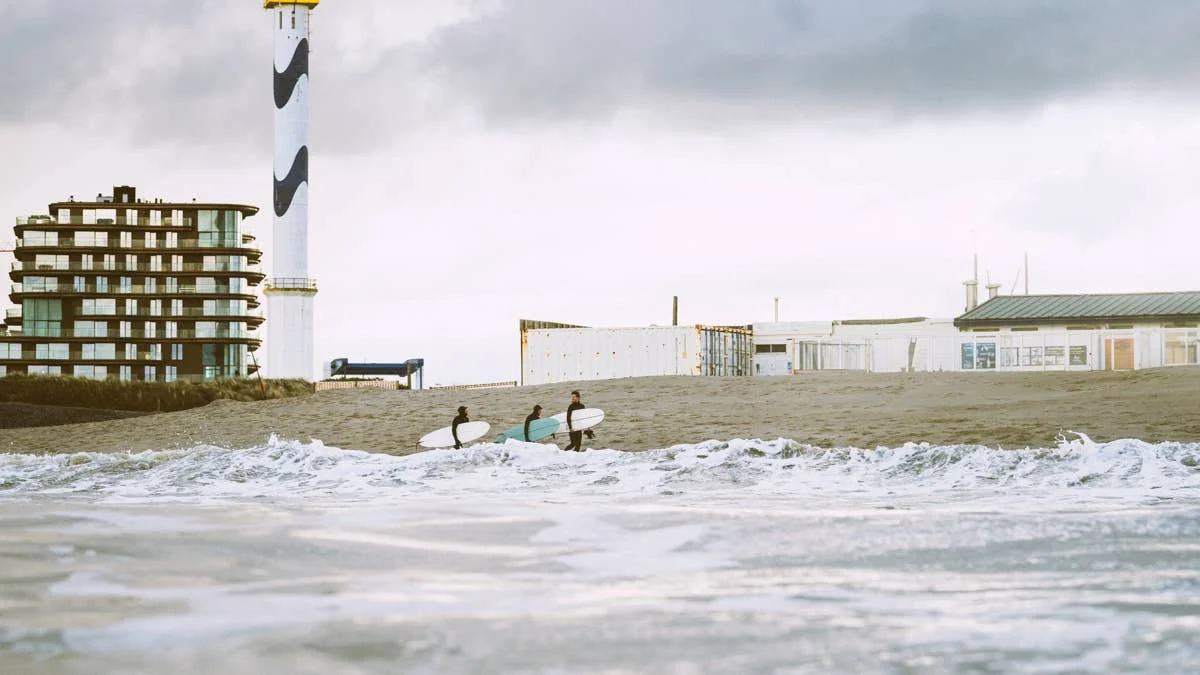
The community has also changed. Swell, a monthly magazine, gave Belgian surfers a platform, while sponsored contests and travelling events helped bring people together. O’Neill Belgium organized one series of trips that sent around 50 campervans to Jersey for a week of surfing and parties. Other outings took surfers by sailboat to the Wadden Islands off the Netherlands.
As sponsorship money dried up, those large gatherings became less frequent. Marcantuoni describes today’s scene as more dispersed: coastal surfers connect around local shops, while inland surfers make the longer journey when conditions line up. The links may be less visible than they were during the event-heavy years, but the habit of travelling for a chance to surf remains.
The value of a wave that works
Belgium’s surf culture puts less emphasis on judging who looks best in the water. Marcantuoni sees the same excitement in someone making a first ride down the line as in a surfer landing a difficult aerial manoeuvre. In a place where good waves are scarce, experience begins with learning what can be done with the waves available.
That outlook is a practical response to the coastline. Belgium doesn’t offer Indonesia’s consistent perfection or the easy access associated with larger surf destinations. Its surfers have developed a different kind of fluency: reading wind, accepting imperfect conditions and moving quickly when a short-lived opening appears.
The takeaway is visible in the way they surf. A clean wave may last only a few hours, and getting there may take most of the day. Still, for Belgian surfers, the narrow window is part of the draw—and learning to find the rideable face in a North Sea wave is a skill that can travel well beyond home.
Related: Inside Romania’s Unexpected Surf Revolution on the Black Sea


