Chicago’s young targets delivered; New England’s roles remain unsettled
Chicago’s passing game got its clearest boost yet from Luther Burden III and Colston Loveland, who combined for nearly 200 yards and two touchdowns against New England. Their production gives fantasy managers a reason to pay attention, though the routes and targets behind the big plays still call for some caution. In New England, Rhamondre Stevenson led the team with 92 receiving yards, while a three-man backfield and injuries at receiver left several roles difficult to trust.
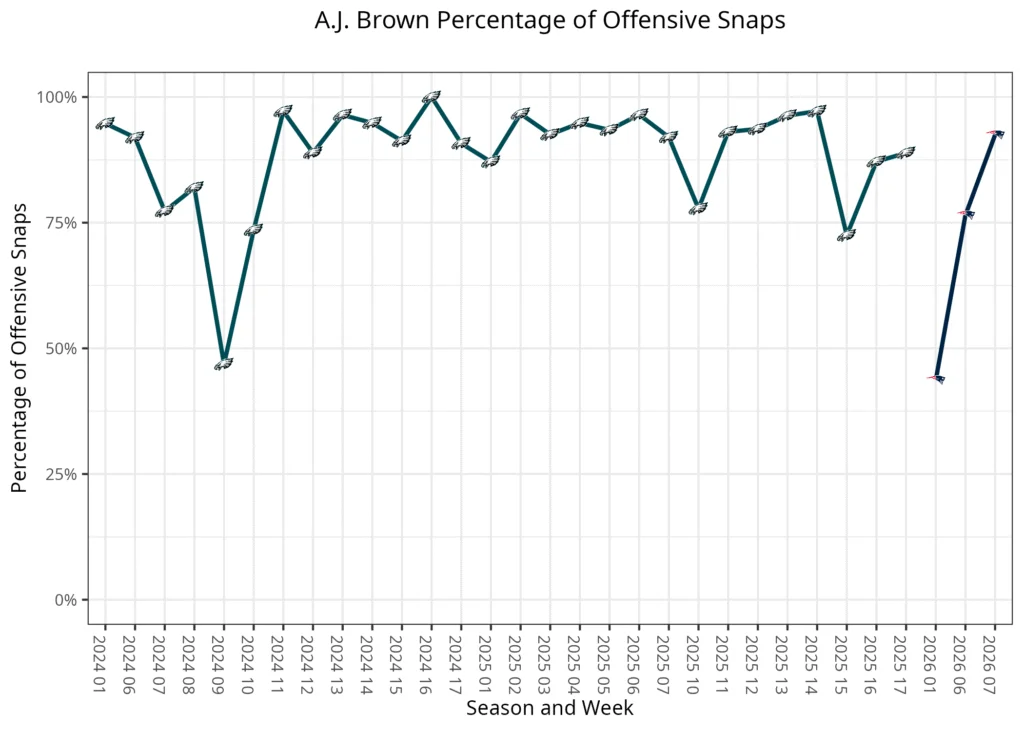
A.J. Brown played more than he had in any game since joining the Patriots, but the larger workload didn’t bring a matching jump in production: he caught three passes for 48 yards. New England’s depleted outside receiver group also pushed more of the receiving work toward Stevenson and the tight ends.

The usage details matter as much as the box score. New England divided running back work among Stevenson, TreVeyon Henderson and Corey Kiner, while Chicago gave D’Andre Swift a season-high share of snaps with Kyle Monangai still sidelined. Cole Kmet’s late knee injury could also affect Chicago’s personnel choices if he misses time, although the immediate fantasy impact on the rest of the offense looks limited.
New England’s three-man backfield puts Henderson in a tough spot
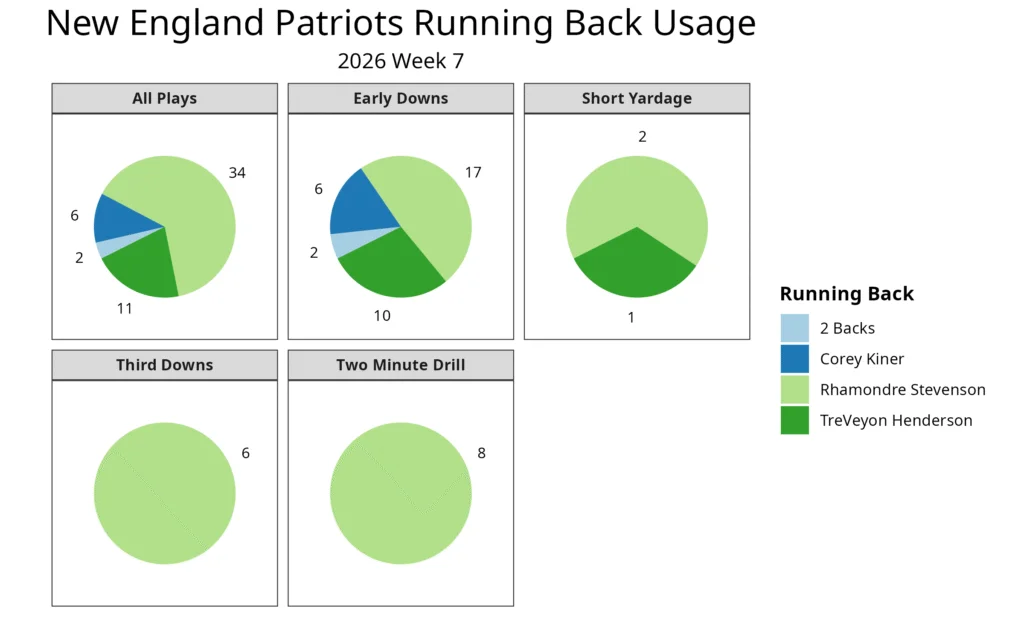
Kiner has become a regular part of the Patriots’ running back rotation after the team traded for him on cutdown day. New England had been unsettled at its third running back position during training camp. Kiner initially saw limited action: he played eight snaps in Week 1 while Henderson was injured, then logged only four normal snaps and 10 in garbage time across the next three games.
Henderson’s high ankle sprain in Week 5 opened the door to a larger role for Kiner, who played 15 snaps that week. The surprising development came after Henderson returned last week: Kiner still saw 12 snaps, all in the final 17 minutes. He made the most of that chance, and New England kept him involved against Chicago.
The Patriots used their backs in specific situations, including third downs, two-minute drills and short-yardage plays. On other drives, the team often gave one back the lead role: Stevenson started the first drive, Henderson the second and Kiner the third. Kiner played just two snaps on that possession, then returned for the fifth drive. With New England chasing the game in the second half, Stevenson became the primary option.
For now, the rotation has cut into Henderson’s playing time more than Stevenson’s. Henderson practiced fully all week, so it’s unclear whether Kiner’s role reflects lingering injury concerns or a lasting change in the depth chart. Henderson has had productive stretches before that were followed by weeks with fewer opportunities, which makes this a trend worth watching.
Stevenson remains a viable fantasy starter when the matchup suits him, particularly after leading New England in receiving yards with 92 and scoring on a catch just before halftime. Henderson’s reduced role makes him difficult to start. If the rotation continues after the Patriots’ extended break, managers in smaller leagues may have reason to move on from Henderson.
Receiver injuries leave Brown as New England’s clearest option
New England’s outside receiver group has been hit hard. Brown went on injured reserve after Week 1, Mack Hollins followed several weeks later, and Romeo Doubs was placed on injured reserve Monday. Those were the team’s top three outside receivers. Brown returned to a larger workload against Chicago after playing 77% of snaps last week; he left only occasionally for short-yardage situations and obvious running plays.
When Doubs left with an injury, Efton Chism III took some of the 12-personnel work and early-down snaps in 11 personnel. Kyle Williams handled more of the clear passing situations, echoing the roles Hollins and Doubs filled in Week 1. Demario Douglas remained New England’s slot receiver in 11 personnel and picked up a few snaps in 12 personnel after sitting out those formations last week.
That arrangement doesn’t offer much fantasy certainty beyond Brown. His increased playing time was encouraging, but three catches for 48 yards fell short of a useful result. In this matchup, Stevenson and the tight ends accounted for more of New England’s receiving production. Until the receiver roles settle, the other wideouts are difficult to trust in lineups.
Swift gets a bigger workload while Monangai remains out
Swift reached a season high in snap rate as Chicago continued without Monangai, who missed his third straight game with thumb and toe injuries and didn’t practice during the week. The pair had generally shared work interchangeably, but Swift’s playing time had fallen from 65% of snaps over the first three weeks to 50% over the next three, even with Monangai absent.
Roschon Johnson served as the backup, with practice squad call-up Zavier Scott again filling the third running back spot. Swift, who had appeared on the injury report with hip and knee issues in Weeks 4 and 5, wasn’t listed this week. He played each of Chicago’s first 20 snaps across its first four drives, even after taking a helmet to the knee.
Swift was already a safe start, and the heavier workload adds upside while Monangai works back toward full health. Some optimism surrounds Monangai’s availability next week, so the split could change quickly. Johnson isn’t a recommended fantasy starter, regardless of where he lands on the depth chart.
Kmet’s injury could open a few more snaps for Chicago’s receivers
Kmet was carted off after suffering a knee injury late in the fourth quarter. He had played 63% of Chicago’s offensive snaps through the first six weeks, including every snap in 12 and 13 personnel, and had taken some early-down work from Loveland. His three catches for 28 yards against New England were season highs in both categories; his other fantasy-relevant performance came with a touchdown in Week 1.
Third-round pick Sam Roush stepped into Kmet’s role late in the game. He has played all of Chicago’s 13-personnel snaps this season, giving the Bears an in-house option if Kmet is unavailable. The team could also use practice squad tight end Stephen Carlson or another available player to maintain its use of heavier personnel packages.
Kmet’s absence would likely have only a modest effect on the rest of Chicago’s offense. Loveland might rotate off the field less often in 11 personnel, while fewer 12- and 13-personnel sets could create extra snaps for Burden and Kalif Raymond. The main question is whether Kmet’s injury changes Chicago’s preferred formations enough to alter those receivers’ playing time.
Burden and Loveland flashed, with usage still worth tracking
Burden’s role in 12 personnel grew, though Raymond continued to play more snaps. Burden ran routes on roughly two-thirds of Chicago’s pass plays, in line with his season average, but his target rate was lower than usual. The production came from making the most of his chances. That’s a promising sign, though managers should distinguish a strong result from a sudden increase in opportunity.
Loveland’s playing time has been steady throughout the season, while his target rate has climbed over the past two weeks compared with his average across the first five. His performance against New England, alongside Burden’s, makes both players worth following as Chicago’s offense develops.
New England also continued to rotate its tight ends. Hunter Henry led the group on early downs in 11 personnel and dominated third-down snaps, while Eli Raridon joined him regularly in 12 personnel. Raridon earned targets at a higher rate than usual and turned that opportunity into a big game. His route participation remains too low to make him a sensible fantasy starter, but he’s the Patriots’ tight end to monitor for a possible second-half breakout. Tanner Arkin returned to the lineup after being a healthy inactive last week.
Reading the usage data
Snap totals include plays later called back by penalties, such as offensive holding or defensive pass interference. The other three listed statistics exclude those plays. Target counts may differ from official NFL figures, particularly when a quarterback clearly throws the ball away and the league assigns a target to the nearest receiver. Carry totals count designed rushing plays; quarterback scrambles aren’t included.
The immediate fantasy picture is clearest for Stevenson and Swift, whose workloads support starting consideration, and less certain for Henderson and New England’s receivers beyond Brown. Chicago’s passing-game production gives Burden and Loveland momentum, but their next step depends on whether the increased target involvement holds as the Bears adjust to Kmet’s injury and Monangai’s eventual return.


