
Denver’s 4-2 start suggests a team finding ways to win. The passing numbers tell a more strained story: Bo Nix is operating an offense with little threat downfield, leaving the Broncos’ defense and play design to carry much of the load. That may be enough for now, but it raises a sharp question about how far this team can go.
A passing game compressed to the short field
Through six games, Nix is averaging 4.9 air yards per attempt, the lowest mark over a six-game stretch at that point in a season in the past 20 years, according to the source. Against Seattle on Thursday Night Football, his longest completion traveled 7.6 yards through the air. He went 0-for-3 on attempts beyond 10 yards.
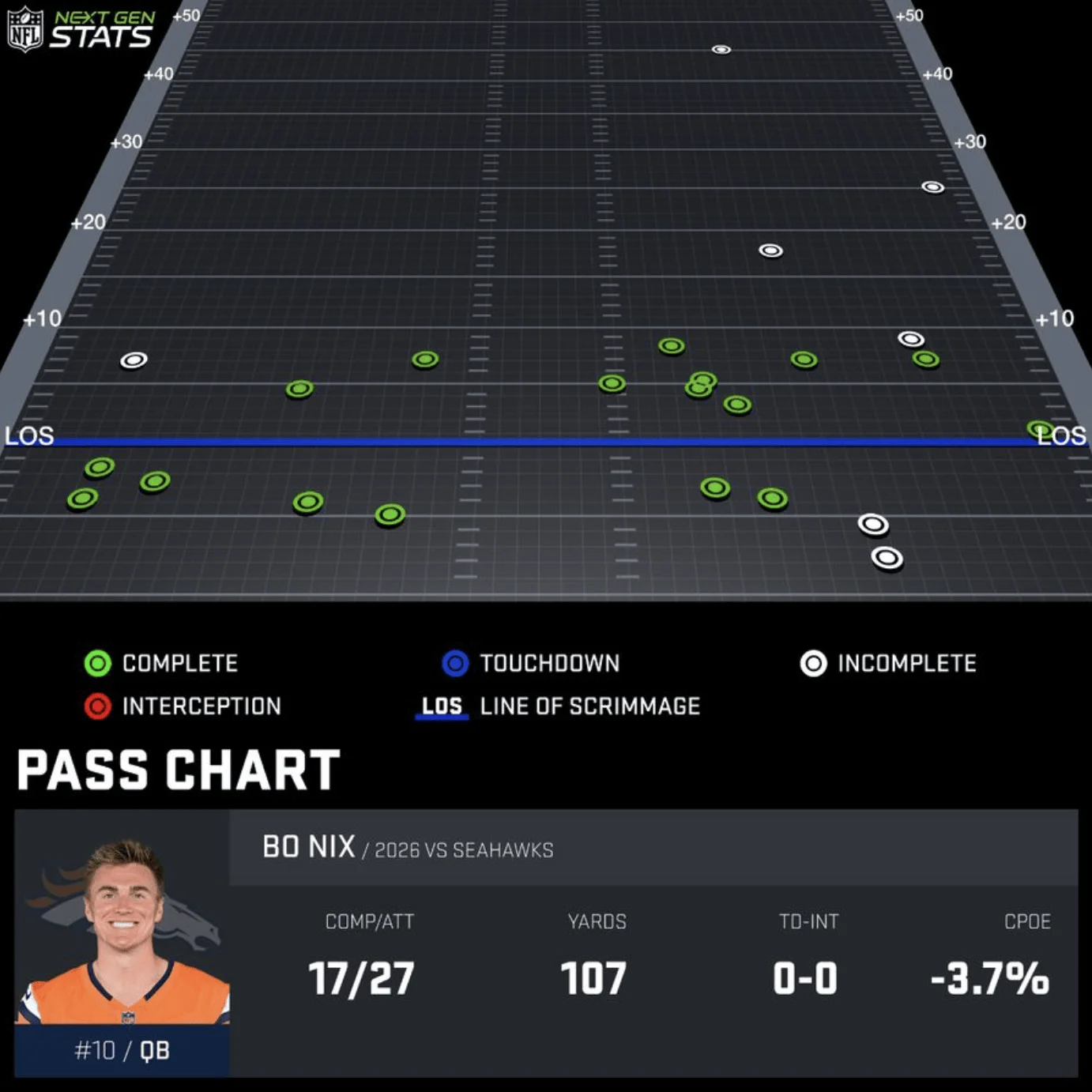
The lack of depth was especially pronounced after halftime, when Nix’s average pass distance fell behind the line of scrimmage. Denver has relied heavily on short throws and screens, leaving little vertical pressure on opposing defenses. Nix has also thrown the ball away 15 times through six games, a pace that would put him at 43 for the season.
The raw total doesn’t explain the concern by itself. The criticism is that Nix appears reluctant to attempt difficult throws, even when the situation calls for a more aggressive response. In the Seattle game, that hesitation became a focus after a third-and-eight screen play: Nix threw the ball away, giving Seattle another possession with a timeout still available.
Fitzpatrick questions Nix’s competitiveness
Former NFL quarterback Ryan Fitzpatrick delivered a blunt assessment during the postgame coverage. He argued that Nix wasn’t playing competitively, pointing to the short throws, the third-down decision and two overtime opportunities when he believed Nix could have taken on more responsibility. On the final chance, Fitzpatrick cited a designed run that could have required Nix to make a defender miss and gain a first down.
“Bo Nix is not playing competitively. It’s almost disrespectful to the quarterback position, how he’s playing football. Frst of all: The guy doesn’t want to throw the ball, that’s fine. He’s throwing to the flats, he’s throwing behind, but he has no trust from his coach. He calls a screen play on 3rd & 8, just run up and let the clock keep going. What’s he do? He throws it away. Seattle gets the ball, they have a timeout. And then in overtime, he’s got two chances to be competitive. The last one being a designed run for him to run, make somebody miss, and get a first down for your football team! Now, they’re in the locker room right now, they’re excited, they won. He’s not playing competitive football right now.”
Fitzpatrick also said he could imagine how head coach Sean Payton and coach Davis Webb might view the performance, as well as the burden it places on Denver’s offensive line and pass catchers. His comments frame the central tension: the Broncos can win with this approach, but a limited passing game narrows the margin for error and the opportunities available to the rest of the offense.
Winning record, uneven production
Denver’s 4-2 record sits alongside a 28th-ranked passing offense. The defense allows 20.8 points per game, ninth in the league, while the offense scores 19.0, ranking 26th. Those figures suggest the Broncos’ early success has depended more on keeping games close than consistently producing points.
There’s a vocal case among fans that Nix’s wins should count as evidence of his quality. But team results don’t settle the question of his individual play, particularly when the defense is doing much of the work. Denver’s next challenge is showing it can generate more offense when opponents tighten up and the stakes rise.
Playoff football would put that limitation under greater pressure. Quarterbacks such as Trent Dilfer, Brad Johnson and Nick Foles have previously raised their level in postseason runs, but Denver can’t count on a similar leap. Nix’s short passing profile is already clear; the Broncos’ ceiling may depend on whether he can become more willing and effective downfield.


