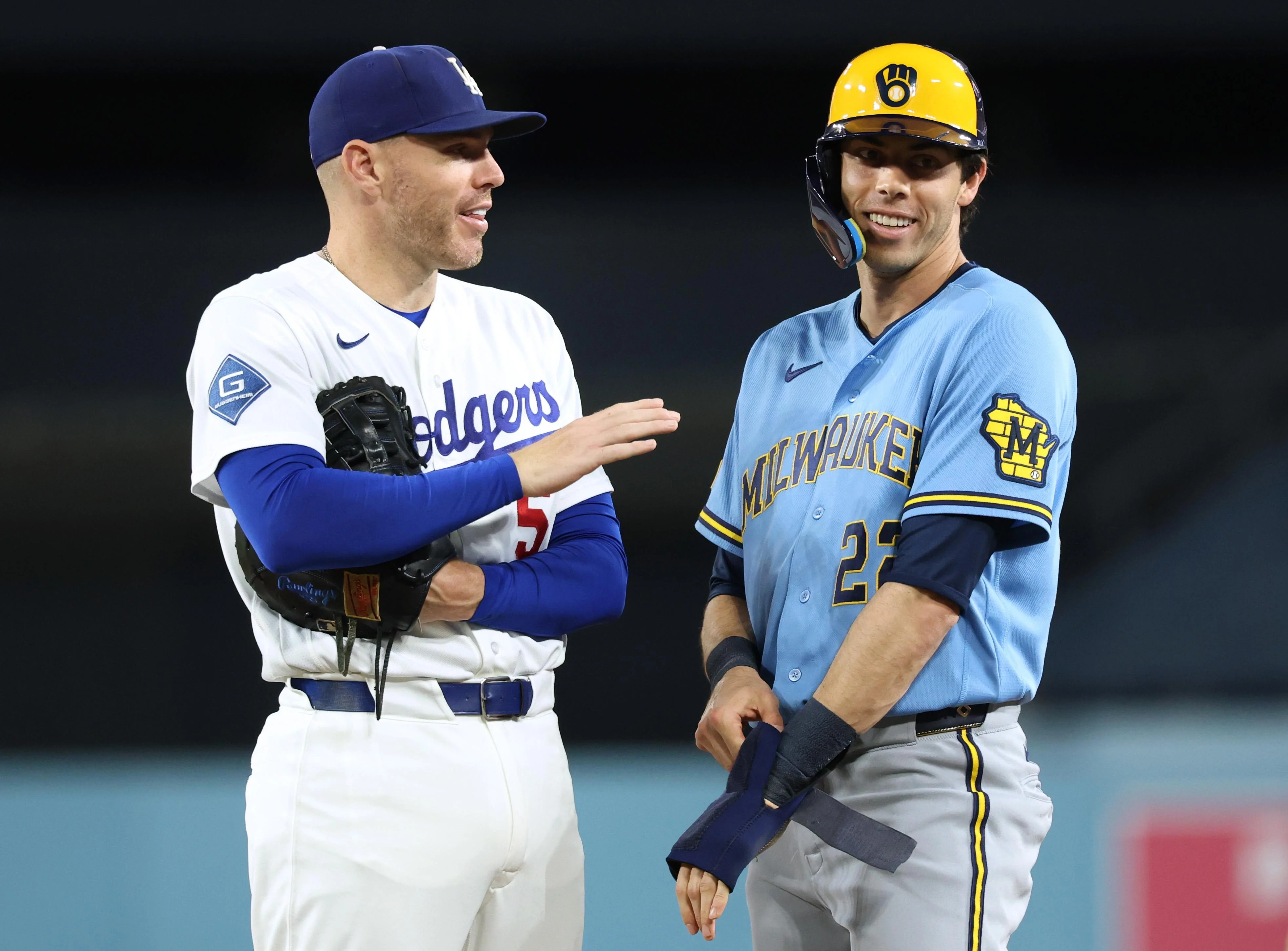
Milwaukee turned last year’s NLCS script around. The Brewers swept the Dodgers in four games, ending Los Angeles’ bid for a third consecutive World Series title and moving one step closer to its first championship appearance since losing the 1982 World Series.
The result reversed the 2025 matchup, when Los Angeles swept Milwaukee on its way to a second straight title. This time, the Brewers’ stronger position in the rotation to start the series helped set the tone.
A four-game sweep
Milwaukee opened with a 2-1 win on Sunday, October 11, then took Game 2 by a 7-4 score the next night. After a day off, the Brewers beat Los Angeles 6-2 on Wednesday and closed the series with a 6-4 victory Thursday.
NLCS Game 1: Sunday, October 11
Brewers 2, Dodgers 1 (Brewers lead series 1-0)
NLCS Game 2: Monday, October 12
Brewers 7, Dodgers 4 (Brewers lead series 2-0)
NLCS Game 3: Wednesday, October 14
Brewers 6, Dodgers 2 (Brewers lead series 3-0)
NLCS Game 4: Thursday, October 15
Brewers 6, Dodgers 4 (Brewers win series 4-0)
Milwaukee had the regular-season edge
The teams met twice during the regular season, splitting a three-game set in Milwaukee in late May before Milwaukee won two of three in Los Angeles in mid-August. The Brewers finished with four wins in seven meetings.
Logan Henderson helped shape both series. He threw five scoreless innings in Milwaukee’s 5-1 opening win in May. In August, the Brewers again got a strong start from Henderson in a 6-2 series-clinching victory. That set followed a 5-4 Milwaukee win, in which the Brewers scored three earned runs off Dodgers closer Edwin Diaz in the ninth, and a 3-1 loss.
The regular-season record offered little certainty. Milwaukee had won all six meetings before last year’s NLCS, only for Los Angeles to sweep the playoff series. In 2026, the Brewers carried their season-series advantage into October and produced a different result.
Rotation depth changed the setup
Milwaukee entered this NLCS with its rotation better lined up than it had been a year earlier. In 2025, the Brewers needed a five-game NLDS against the Chicago Cubs and turned to Jacob Misiorowski in the deciding game. For the NLCS opener, they went with reliever Aaron Ashby ahead of an injured Quinn Priester, who was later diagnosed with thoracic outlet syndrome.
This time, Misiorowski was set to start Game 1, with Henderson lined up for Game 2. Henderson had not allowed three or more runs in any of his 24 starts across the regular season and playoffs. The source’s pre-series outlook flagged questions about Milwaukee’s pitching beyond those first two games, but the Brewers began the matchup with a clearer rotation plan.
Los Angeles brought the majors’ second-highest payroll at $339 million, behind only the New York Mets. Milwaukee had home-field advantage as the National League’s top regular-season team. The series made the contrast less about payroll than execution: the Brewers converted their early pitching position and home-field edge into four straight wins.
Ohtani’s form was a question
Shohei Ohtani had dominated the previous NLCS, hitting three home runs and striking out 10 as a starting pitcher in Game 4 of the Dodgers’ 2025 sweep. Lingering injuries had since led Los Angeles to shut him down as a pitcher, leaving his bat as the main concern for Milwaukee’s staff.
His production had cooled after a strong June. In August, he hit .241/.322/.472. Across four NLDS games against the Atlanta Braves, he went 2-for-13, both hits singles, for a .154/.267/.154 line. Los Angeles also moved him to fifth in the order for Game 3, his lowest lineup spot during his Dodgers tenure.
The original pre-series forecast expected a seven-game matchup and picked Milwaukee to advance. The actual result came much sooner: the Brewers swept the Dodgers, turning a narrow prediction into a decisive series win.


